Italy is one of the oldest names in geography and one of the youngest nations in Europe. For well over a thousand years after the fall of the Roman Empire, the peninsula was a patchwork of rival states: the Kingdom of Sardinia in the northwest, Lombardy and Venice under Austrian rule in the north, a cluster of duchies in the center, the Papal States across the middle, and the Kingdom of the Two Sicilies covering the entire south. Foreign empires, from Spain to Austria, treated Italy as a prize to be divided and ruled from Madrid, Vienna, or Paris. The people spoke regional dialects so different that a Sicilian and a Piedmontese could barely understand each other, and the writer Metternich famously dismissed the whole idea of the country by calling Italy merely a geographical expression. It was only in the nineteenth century that this scattered mosaic was forged into a single kingdom, and the man who struck some of the decisive blows for that unification learned his trade not in Italy, but as a horseman on the cattle plains of South America.
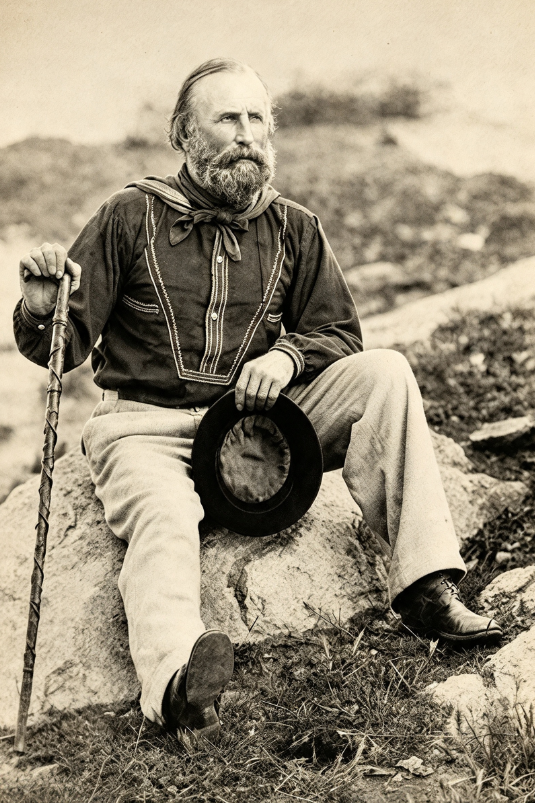
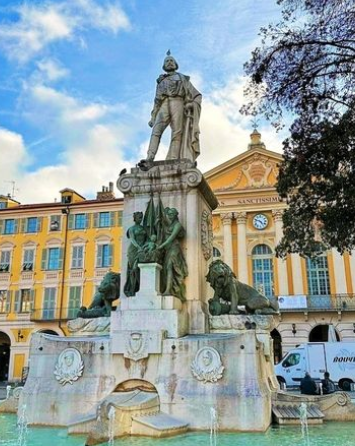
Giuseppe Garibaldi was born on July 4, 1807, in the port city of Nice, then part of the French Empire and today part of France. He went to sea as a boy, following his father’s trade as a coastal trader, and by his early twenties he had sailed across the Mediterranean and into the Black Sea. It was aboard a ship in the port of Taganrog, in Russia, that he reportedly met a political exile who first told him about the dream of a united Italian republic. That dream never left him. In Marseille, around 1833, he met Giuseppe Mazzini, the prophet of Italian nationalism, and joined his movement, the Giovine Italia (Young Italy). When a planned uprising in Piedmont collapsed in 1834, Garibaldi, a young officer in the fleet of the Kingdom of Sardinia, was condemned to death in absentia. He escaped to South America and arrived in Rio de Janeiro in early 1836. He would spend roughly the next fourteen years in exile there, years that forged him into the soldier the world would later celebrate.
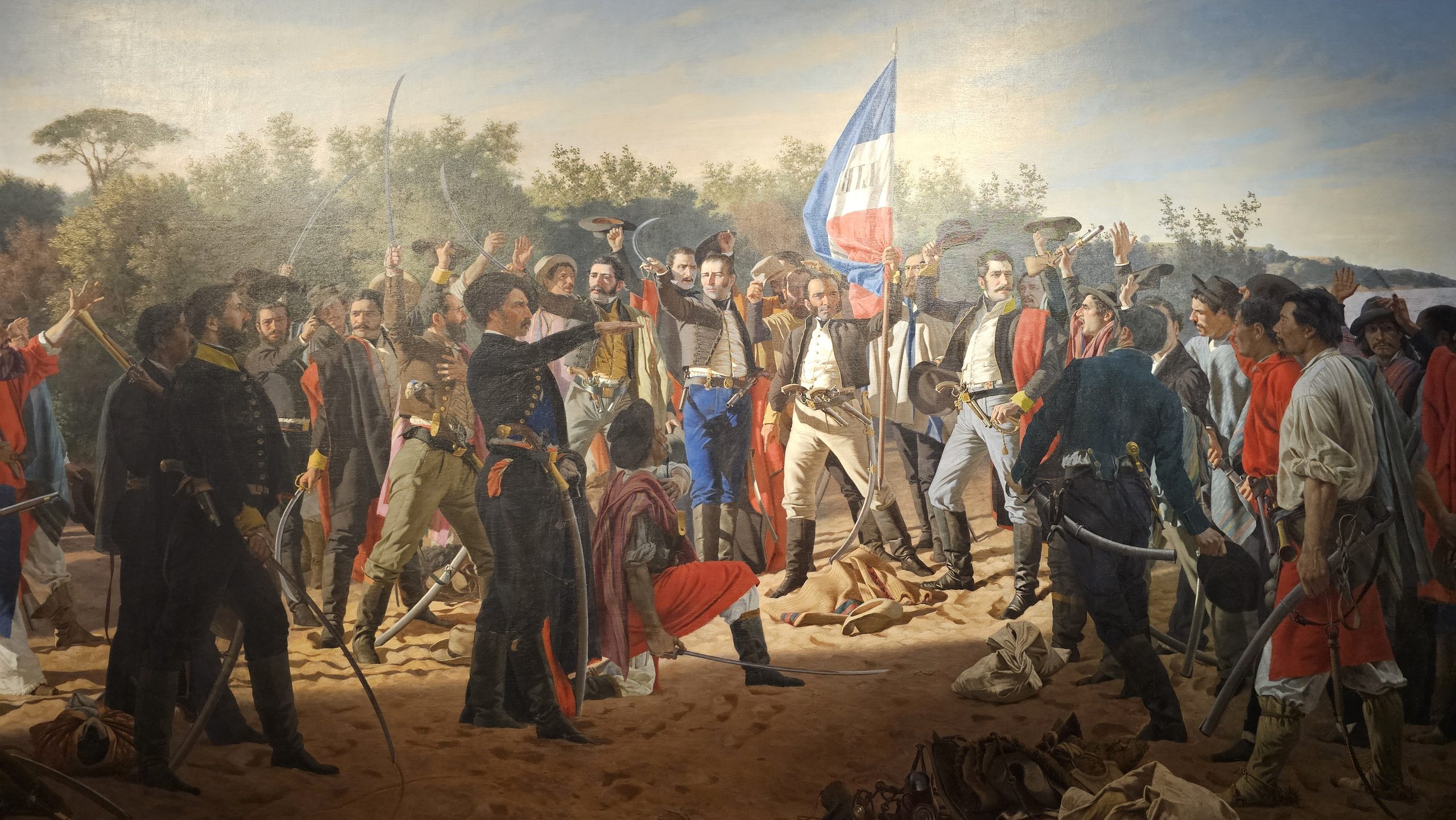
His first wars were fought in the vast cattle country of southern Brazil. In the state of Rio Grande do Sul, rebels known as the Farrapos (Ragamuffins, a mocking nickname for their ragged dress that they proudly adopted) had risen against the Brazilian Empire in the Guerra dos Farrapos (Ragamuffin War), hoping to found an independent Riograndense Republic. Garibaldi offered them his sailor’s skills. Since the rebels controlled the inland waters of the Lagoa dos Patos (Lagoon of the Ducks) but had no real fleet, he improvised one. He helped build and command small sailing vessels, including the Seival and the Farroupilha, and in one famous episode he had the boats hauled overland on enormous wooden carts pulled by a hundred teams of oxen, so they could be relaunched in coastal waters and used to attack the city of Laguna in Santa Catarina. It was there, in October 1839, that he met Ana Maria Ribeiro da Silva, a young Brazilian woman remembered simply as Anita, who became his companion in war and in life.
Anita embodied the frontier world that was shaping him. A skilled horsewoman from the pampas, she is often credited with introducing Garibaldi to the ways of the gaucho (the horseman and cattle herder of the South American plains). He embraced that identity completely. He took to wearing the loose red shirt, the poncho (a blanket-like cloak with a hole for the head), and the wide hat of the gauchos, a costume he would keep, in one form or another, for the rest of his life. More important, he learned the gaucho way of fighting: fast cavalry raids, small boats used for surprise attacks, long marches with few supplies, and war fought by volunteers rather than drilled regulars. These were the methods of guerrilla warfare, learned on the pampas and lagoons of Brazil, that no European military academy taught.
Those years were brutal. In late 1839 Garibaldi’s little squadron was trapped and defeated by the imperial Brazilian navy in the anchorage of Imbituba, and Anita fought beside him in the battle. Their first son, Domenico Menotti, was born in the middle of the fighting at Laguna in 1840. When the imperial army counterattacked, the family retreated with the ragged republican army across the freezing highlands of Rio Grande do Sul toward safety at São Gabriel, Anita at one point carrying her infant son in a sling under her poncho to keep him alive in the mountain cold. With the separatist cause clearly doomed, Garibaldi left its service and in 1841 moved with Anita to Montevideo, in Uruguay, where he worked as a trader and a schoolteacher and where they married in 1842. They would have four children together.
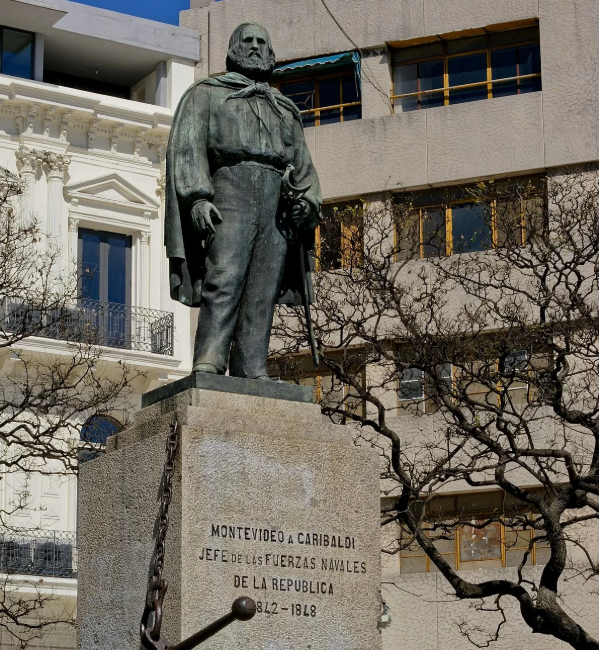
Montevideo brought him back to war, and back to Italy. During the long Uruguayan Civil War, in which the city of Montevideo endured years of siege, Garibaldi first took command of the small Uruguayan fleet in 1842, and then raised a unit of Italian exiles to fight for the city. The garment that defined his legend was born here: his men, unable to afford uniforms, were reportedly dressed in the loose red shirts worn by workers in the city’s slaughterhouses and salting houses. They became famous as the Camicie Rosse (Red Shirts). In 1846, at the Battle of San Antonio, the Italian Legion charged against heavy odds and made Garibaldi’s name known across the Atlantic. Europeans read of a romantic exile commander in gaucho dress who never seemed to lose. The red shirt, originally a practical garment of the South American plains and docks, had become the permanent uniform of his followers and one of the great political symbols of the nineteenth century.
When revolution returned to Europe in 1848, Garibaldi sailed home with members of his Italian Legion to join the Risorgimento (the resurgence or rebirth, the name given to the movement for Italian unity). He fought against the Austrians in the north, and in 1849 he led the desperate defense of the short-lived Roman Republic against a French army sent to restore the Pope. When the republic fell, he escaped from a burning Rome with Anita at his side, pregnant and sick, and she died during the terrible retreat through central Italy in August 1849, in his arms near Ravenna. He fled into exile once more, living for a time in New York and then sailing the Pacific as a trader, but his fame only grew. In Italy he was already becoming a legend, the general in the red shirt who had learned his trade in another world. People began calling him the Eroe dei Due Mondi (Hero of the Two Worlds), honored in both South America and Europe.
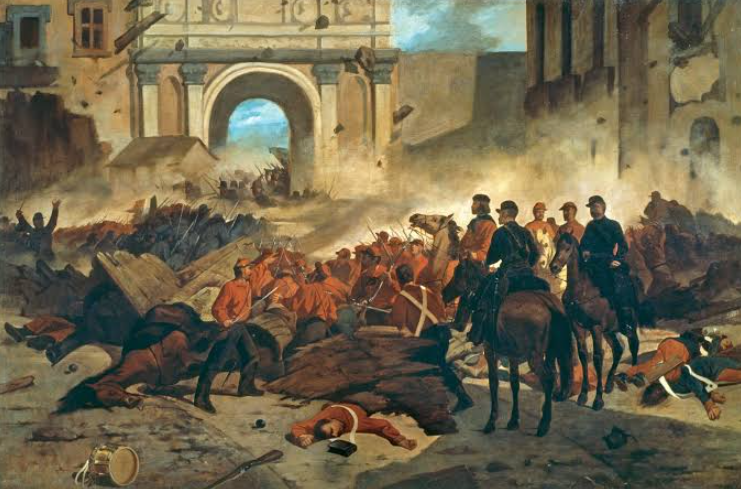
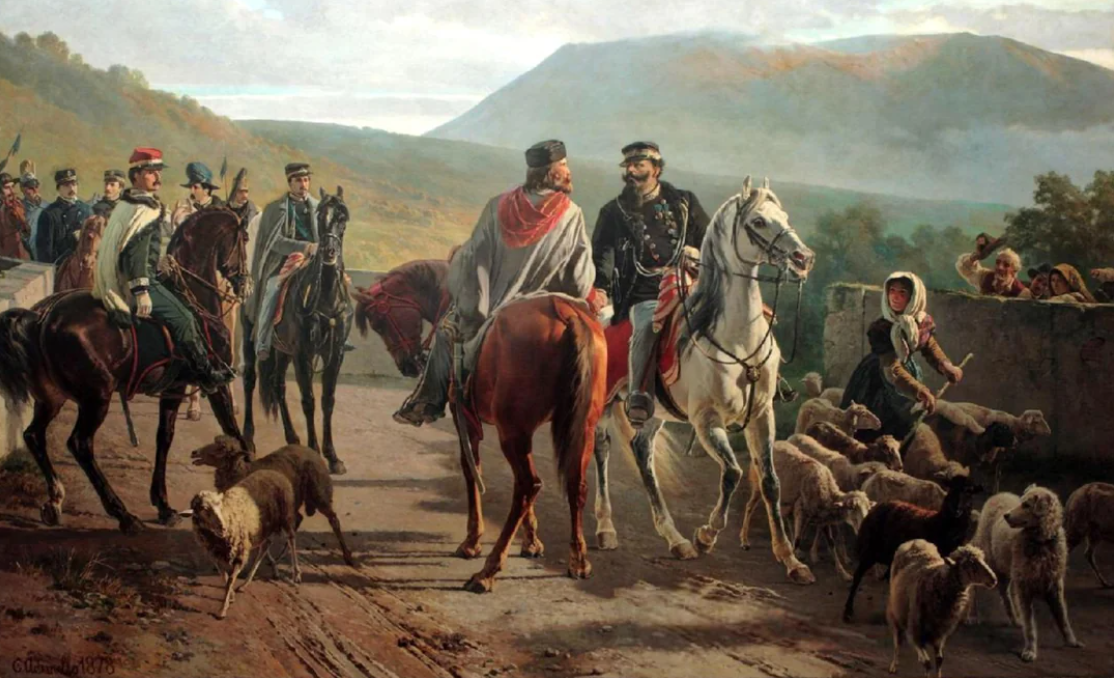
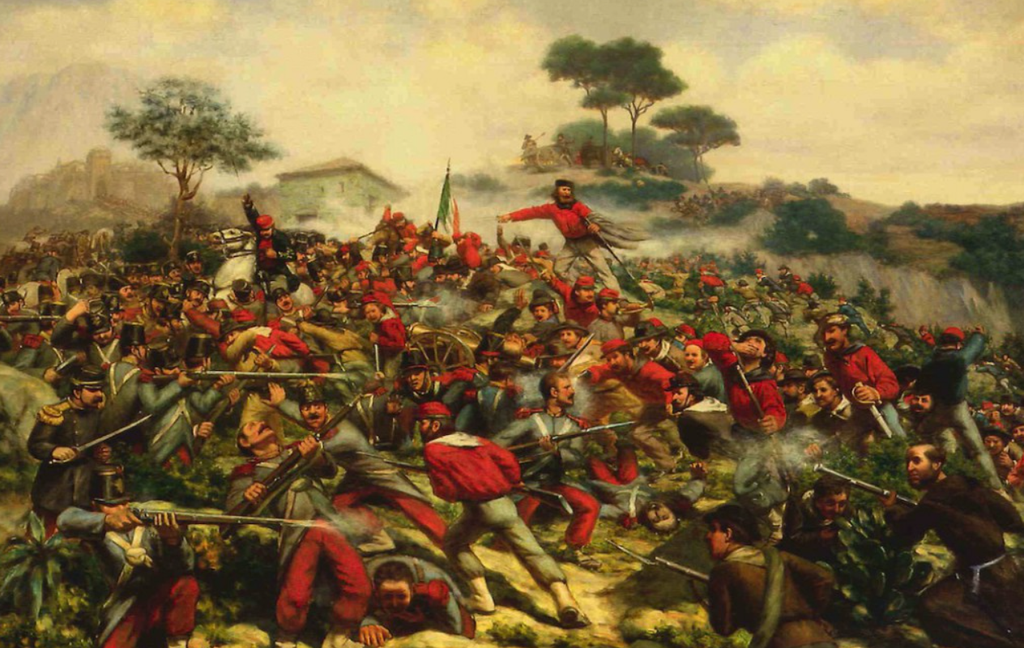
He returned to Italy in 1854, and the cause he served grew steadily closer to victory. Piedmont, under King Victor Emmanuel II and his minister Camillo di Cavour, fought Austria in 1859 and won Lombardy. Then, in May 1860, came the exploit that made him immortal. Gathering roughly a thousand volunteers, many of them veterans of his earlier campaigns and sons of his old comrades, he sailed from the shore at Quarto near Genoa and landed at Marsala in western Sicily on May 11, 1860. The expedition entered history as the Spedizione dei Mille (Expedition of the Thousand). With no official authorization from any government, and facing a Bourbon regular army far larger than his own, Garibaldi defeated the Neapolitan forces at Calatafimi, stormed Palermo, won the battle of Milazzo, and crossed to the mainland, where the Bourbon regime collapsed. Sweeping up volunteers as he went, he took Naples, and on October 26, 1860, at the small town of Teano, he met Victor Emmanuel II and handed the entire conquest of southern Italy over to the king, hailing him as king of Italy. A plebiscite confirmed the union, and on March 17, 1861, the Kingdom of Italy was proclaimed.
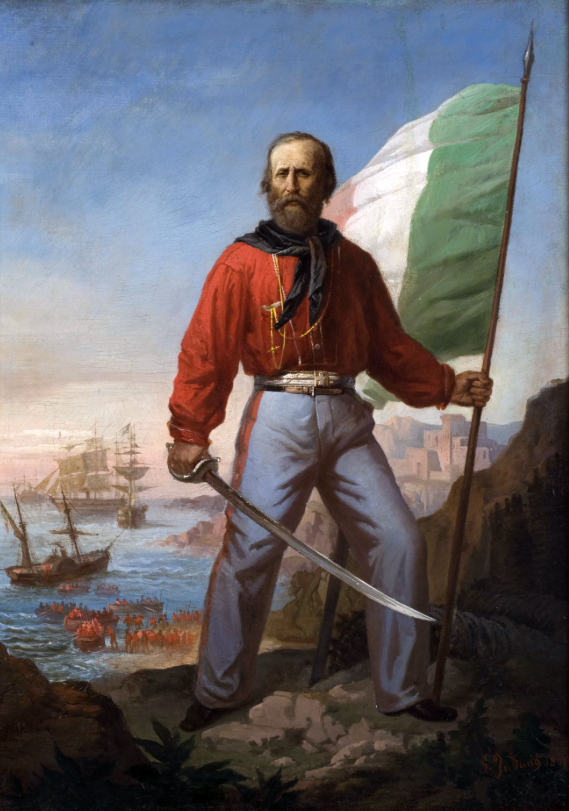
Garibaldi fought on to finish the work. In 1862 he marched toward Rome, still held by the Pope and protected by French troops, and was wounded and arrested by the Italian army at Aspromonte. In 1866 he commanded volunteers against Austria and won the battle of Bezzecca in the Trentino. In 1870 he went to aid France in its war against Prussia, commanding a force in the Vosges. Rome finally became the capital of Italy in 1871, and the old general retired to his rocky island farm of Caprera, off Sardinia, where he lived simply, surrounded by animals and grandchildren, still wearing his red shirt. He died there on June 2, 1882.
The story of Garibaldi is really two stories braided together. A condemned Italian sailor fled to the pampas and lagoons of the far south, where a gaucho named Anita and a decade of frontier war taught him horsemanship, endurance, and the guerrilla’s craft, and gave him the red shirt of the South American plains. He then carried those lessons back across the ocean and used them to strike the blows that united Italy. It is why Italians honor him alongside Mazzini, Cavour, and Victor Emmanuel II as a Padre della Patria (Father of the Fatherland), and why a man who spent his most formative years herding cattle and raiding rivers in la banda oriental (Brazil and Uruguay) can fairly be remembered as the gaucho who became the father of modern Italy.
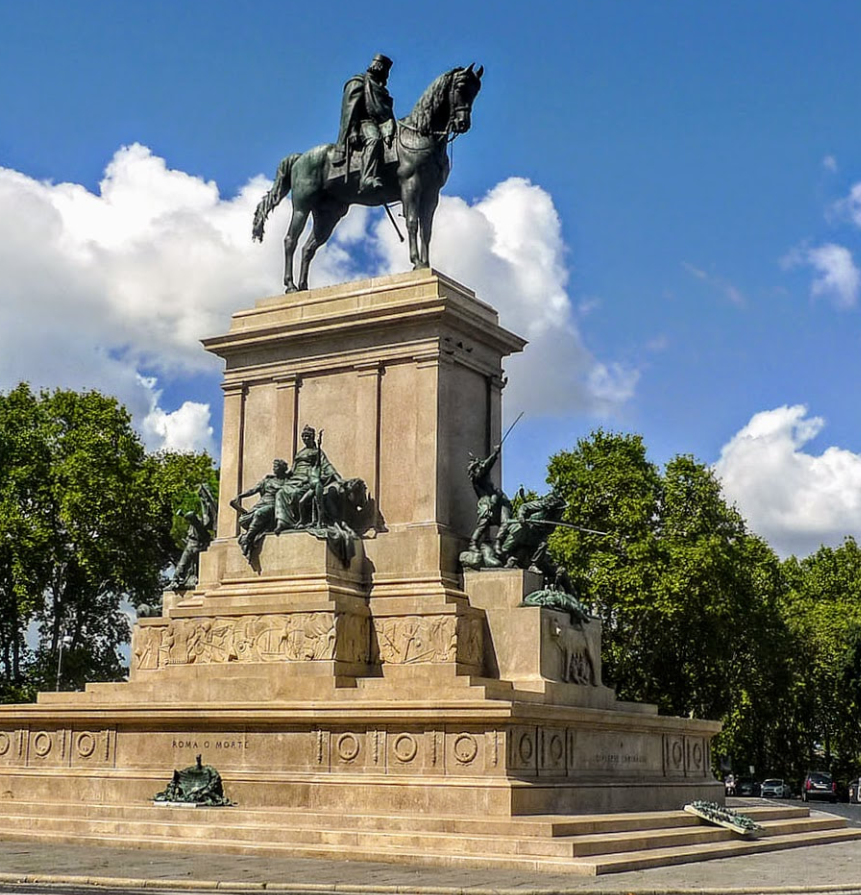
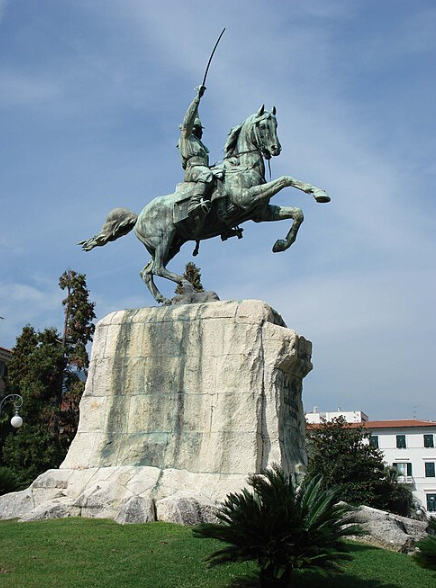
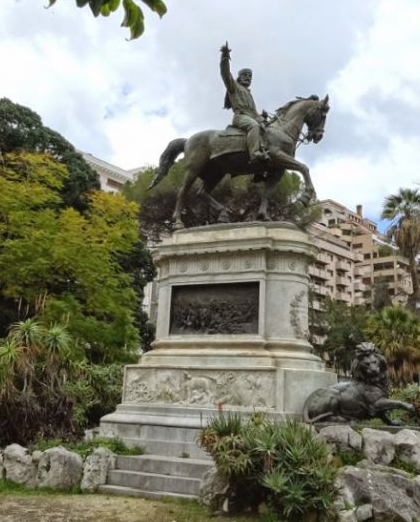
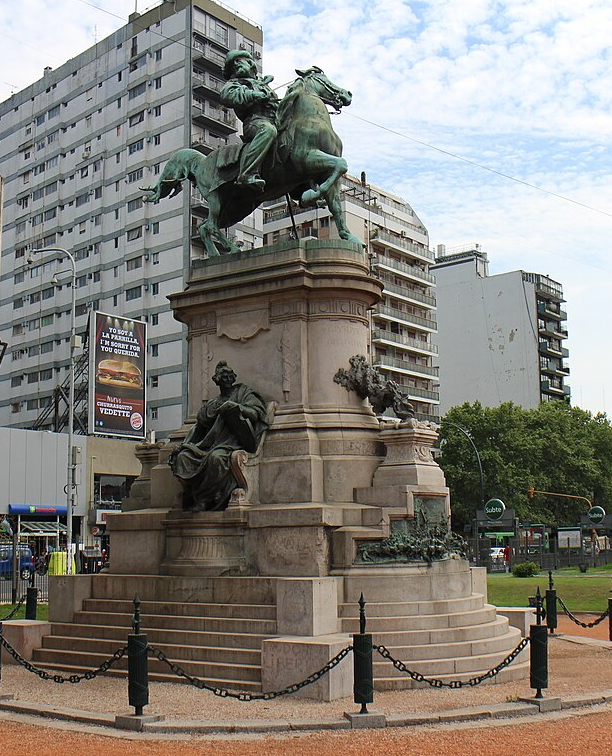
Giuseppe Garibaldi is profoundly honored worldwide as the “Hero of the Two Worlds,” a legacy cemented by the hundreds of formal public monuments and statues dedicated to him across the globe. As the legendary military commander who fought for freedom in South America and spearheaded the unification of Italy, he became a towering symbol of liberty and democratic revolution. To solidify national identity post-unification, nearly every major city and town in Italy erected a prominent monument in his likeness, typically placing him in central public squares (piazze). Beyond Italy, the global Italian diaspora funded and built monumental statues in major international hubs, including New York, Buenos Aires, and his birthplace of Nice, making Garibaldi one of the most widely sculpted secular figures in modern history.