I: A life on the War Frontier
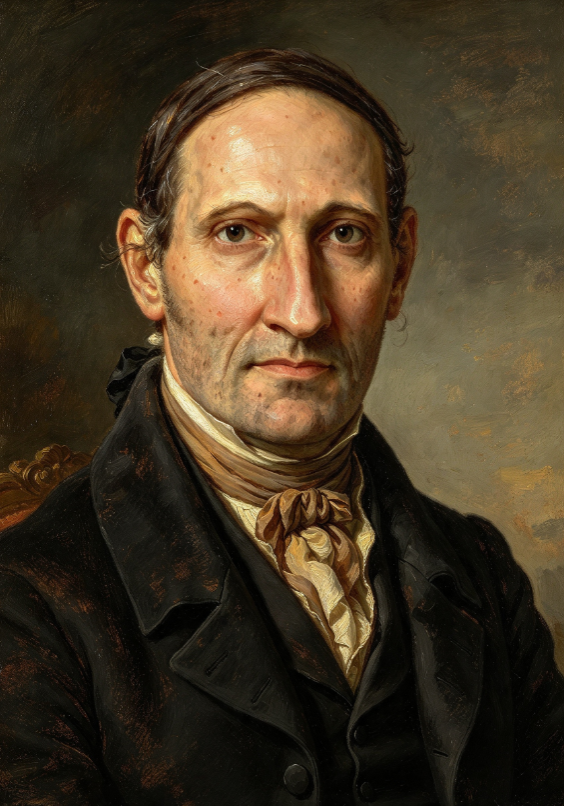
Antônio Simões Pires was born in Rio Pardo on October 12, 1766, the second and apparently last child of Mateus Simões Pires and Catarina Inácia da Purificação. His birthplace tells us almost as much about the world into which he was born as his parents’ names do. Rio Pardo was not an ordinary colonial village. It had been established as a strategic Portuguese position in the middle of the southern frontier, where the Jacuí River connected the interior with the settlements farther east and where Portuguese authorities were attempting to hold a territory continually contested by Spain, Indigenous peoples, and competing local interests. The military presence was substantial. The fort of Jesus, Maria, José had been established there in 1752, and the Dragoon Regiment of Rio Pardo followed in 1754. Antônio therefore entered life in a society where military service, commerce, cattle raising, landholding, and government were closely connected.
He was also born into a family that already understood what the frontier could do to a man. His father Mateus had come to southern Brazil from the Azores and had experienced the instability surrounding Colônia do Sacramento, Santa Catarina, Rio Grande and Rio Pardo. Mateus became a merchant and supplier to the military establishment, and his commercial life exposed him directly to the wars that periodically swept across the region. Antônio was still a child when the Spanish invasion of 1777 brought another major crisis. At approximately eleven years of age, his father took him north toward Rio de Janeiro. The journey was made overland through Rio Grande, Santa Catarina and São Paulo, crossing the Serra before continuing toward the colonial capital. The journey was extraordinary for a child, but it was also a form of education. Antônio was learning the geography of Portuguese America at ground level, by road, river crossing, settlement and frontier trail rather than from a map.
He remained in Rio de Janeiro for roughly eleven years. When he returned to Rio Grande do Sul around 1788, he was no longer the child who had left Rio Pardo. He was approximately twenty-two years old and had spent much of his adolescence in another part of Portuguese America. He returned to a family already involved in commerce and frontier affairs, and almost immediately entered the social world of Rio Pardo’s established families. On January 17, 1789, he married Maria do Carmo Violante de Queiroz e Vasconcellos. Her father, Alexandre Luiz de Queiroz e Vasconcellos, was a lieutenant in the Dragoon Regiment, and her family belonged to the military and property-owning elite of Rio Pardo. The marriage was therefore more than a private event. It connected Antônio to one of the networks through which military rank, land, commerce and political influence circulated in the town. The couple would eventually have thirteen children, seven sons and six daughters, creating the large family network that would become one of the enduring legacies of Antônio’s life.
The young Antônio initially followed the commercial path established by his father. That was logical. Mateus had demonstrated that a man who understood the frontier could make money by moving goods and supplying military establishments. But the frontier was changing, and Antônio gradually moved toward a different kind of wealth. Instead of remaining primarily a merchant, he began acquiring and developing rural properties. He became a cattleman and landholder, establishing interests in places including Camaquã, Quaraí and other districts farther toward the southern frontier. The change would eventually make him one of the more substantial proprietors associated with Rio Pardo, but it was not simply a change of occupation. It reflected the transformation of the southern frontier itself.
II: That transformation accelerated in 1801.
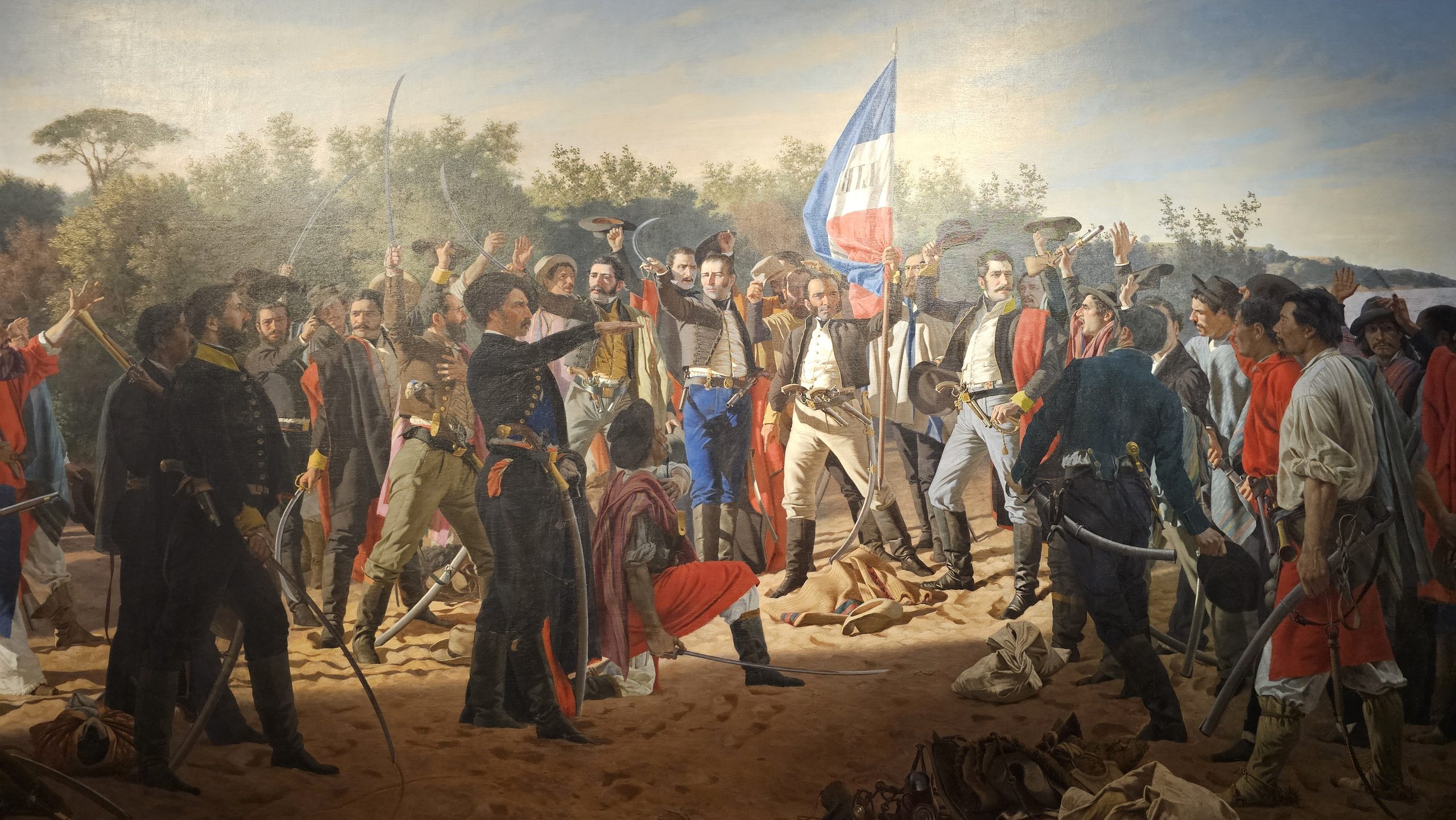
The war of 1801 began as part of the larger conflict between Portugal and Spain, but in southern America it created an opportunity that Portuguese frontier men immediately recognized. The Spanish position in the eastern Missions was vulnerable, and the Portuguese authorities possessed men who knew how to exploit that vulnerability. Two of the most important were José Borges do Canto and Manuel dos Santos Pedroso. Borges do Canto had served with the Dragoon Regiment at Rio Pardo before becoming involved in contraband and frontier activities. When war began, he offered his services to the Portuguese authorities in return for a pardon. Pedroso was an estancieiro who knew the country and the people. Their expedition was not a conventional European army marching in formation. It was a small, highly mobile frontier force whose strength depended on horses, local knowledge, information and alliances.
In August 1801, Borges do Canto and his companions moved against the Spanish positions in the Missions. Their numbers were small, but they were reinforced by other frontier men. They attacked and occupied positions, moved rapidly between settlements and river crossings, and developed relationships with Guarani leaders who were themselves making difficult decisions about the collapse of Spanish authority. The surviving accounts are particularly valuable because they show that the conquest was not simply a military operation imposed upon a passive population. Guarani leaders and communities made their own choices, supplied horses and information, and sometimes cooperated with the Portuguese because their own political and local interests had become more important than loyalty to a distant Spanish authority.
The campaign eventually resulted in the Portuguese conquest of the Seven Peoples of the Missions east of the Uruguay River. The significance of this cannot be overstated. A territorial frontier that had previously been contested between two empires was suddenly transformed. Portugal now possessed effective control over a vast area that would become economically and strategically important to the future Rio Grande do Sul. The war ended diplomatically in Europe, but the territorial reality created by the campaign remained. The Portuguese did not simply hand the conquered territory back. The conquest became one of the foundations of the later Brazilian frontier.
We need to be particularly careful at this point when telling Antônio’s personal story. There is no evidence presently before us that allows us to place him beside Borges do Canto at a specific battle in 1801. It would be tempting, because Antônio was already thirty-five, was a military man and later became a major frontier proprietor, to make him one of the mounted fighters of the campaign. That would be speculation. The older Simões Pires genealogical tradition does, however, say that Antônio and his father supplied horses during the wars with the Spaniards and suffered losses to their properties in Quaraí and Sarandi. That tradition fits the economic reality of the frontier, but until the actual military requisition records are found, it should remain identified as family tradition rather than documentary fact.
The more certain point is that Antônio’s future was transformed by the outcome of the war. The conquest of the Missions expanded the Portuguese-controlled frontier and increased the value of land, cattle and horses. Men who already possessed experience, capital and connections were in a position to take advantage of the new geography. Antônio was one of those men. He was already establishing himself as a landowner, and his subsequent properties spread through precisely the frontier territory whose strategic importance had been increased by the events of 1801.
His connection with the military system also became more formal. By the end of the eighteenth century and the beginning of the nineteenth, Antônio was serving in the Fronteira do Rio Pardo and was associated with the administration of the Royal Storehouses as Almoxarife dos Armazéns Reais. In 1810, Prince Regent João confirmed him as a lieutenant. This is an important stage in his development because the distinction between his military career and his economic career was becoming increasingly difficult to make. His military position gave him status and connections, while his property and livestock gave him resources that were useful to the military system. In the southern frontier, the two forms of power reinforced one another.
III: Then the war returned.
The Portuguese intervention in the Banda Oriental in 1811 occurred in the aftermath of the political collapse of the Spanish monarchy and the rise of revolutionary movements in the Río de la Plata. José Gervásio Artigas emerged as the principal military and political leader of the eastern revolutionaries. Portuguese authorities feared that the revolutionary movement would destabilize the frontier and threaten Portuguese interests. D. Diogo de Souza, captain-general of Rio Grande do Sul, assembled an army and entered the Banda Oriental. Portuguese and Brazilian forces moved through the frontier region, including the area around Bagé and the Quaraí frontier. The campaign eventually produced a temporary withdrawal, but it established a pattern that would dominate Antônio’s mature life: armies operating across the border, frontier properties exposed to military movement, and cattle and horses treated as strategic resources.
Antônio was approximately forty-five years old during this first Portuguese intervention. By then he was no longer simply a young officer. He was an established husband, father and landowner. His military service had become part of his public identity, while his properties were spreading across the very region affected by the conflict. We should again resist inventing battlefield exploits that the surviving evidence does not provide. His importance was broader. A man with cattle, horses, land, labor and local connections was part of the infrastructure that made a frontier army possible, whether or not he personally rode with the column.
The situation deteriorated further after 1816. Portugal launched a much larger invasion of the Banda Oriental under Carlos Frederico Lecor. This time the objective was not simply to stabilize the frontier. The Portuguese intended to destroy Artigas’s power and establish lasting control over the eastern territory. Montevideo eventually fell, Artigas was defeated and forced into exile, and in 1821 the territory became the Cisplatine Province within the Portuguese-Brazilian monarchy. The war altered the political geography of the region again, but it also intensified the economic and military importance of the Rio Grande frontier.
For Antônio, these years were the period in which his estate network became increasingly important. His holdings were not concentrated in one secure agricultural district. They stretched through frontier country, including Quaraí and other areas exposed to the movements of armies and irregular forces. The older family tradition specifically remembers losses of cattle and horses in Quaraí and Sarandi during the wars with the Spaniards. Whether every detail can ultimately be confirmed or not, the underlying reality is certain enough: an estancieiro in that region could accumulate enormous wealth in livestock, but that wealth was perpetually vulnerable to military disruption.
This explains something that might otherwise seem strange about Antônio’s later fortune. His inventory shows an enormous livestock operation. In the properties associated with him were thousands of animals, including cattle, sheep, horses, mares and working animals. His rural properties represented a major proportion of his wealth. But those animals were not merely an investment portfolio. In the military economy of the frontier, horses were transport and cavalry. Cattle were food, hides and movable wealth. Oxen were transport. A large herd represented economic power and, indirectly, strategic power. The same resource could enrich Antônio in peacetime and be taken from him during war.
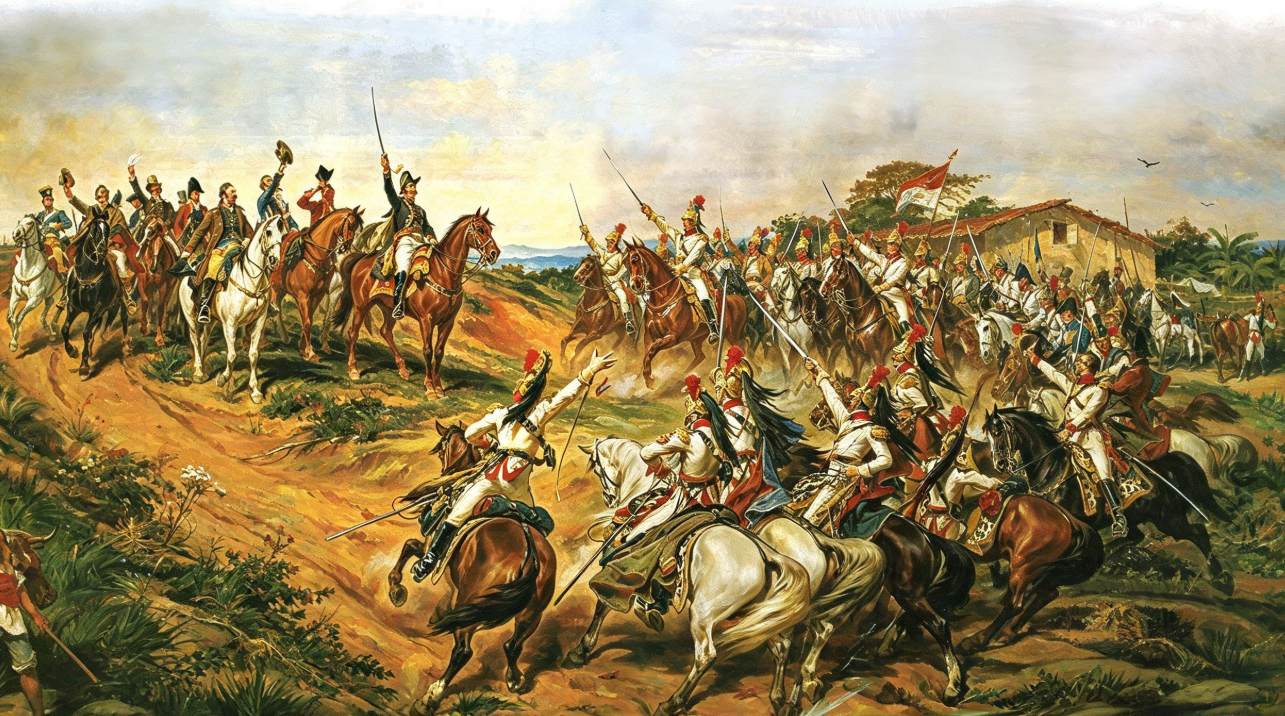
The political world around him changed again in 1822, when Brazil became independent. Antônio was fifty-five. He had been born a subject of the Portuguese monarchy and now became a citizen of the Brazilian Empire. But independence did not end the southern frontier wars. The Cisplatine Province remained under Brazilian control, and in 1825 a new revolt broke out under Juan Antonio Lavalleja. The Thirty-Three Orientals declared the separation of the province and sought union with the United Provinces of the Río de la Plata. Buenos Aires supported the movement, and Brazil entered another major war.
This time Antônio was an older man, approximately fifty-nine when the war began. It would therefore be misleading to portray him as a young field officer charging across the frontier. His position was different now. He was an established captain, a substantial landowner, a father of a large family and a man with decades of experience in the military and civil life of Rio Pardo. The war affected him through precisely those things. His properties were tied to the frontier economy, his horses and cattle were strategically valuable, and his family and political connections were embedded in the society that had to supply the Imperial war effort.
The major land battle of the Cisplatine War came at Passo do Rosário on February 20, 1827. Brazilian forces failed to achieve a decisive victory, and the war became increasingly expensive and politically damaging for the Empire. The Brazilian government maintained control of important positions and the navy imposed a blockade, but neither side could obtain a final military settlement. British mediation eventually produced the Convention Preliminary of Peace in August 1828, recognizing the independence of the territory as the Republic of Uruguay. The result was a profound geopolitical change. The Brazilian Empire had lost the Cisplatina, and the frontier that had once been an internal imperial zone now faced an independent state.
The timing of Antônio’s promotion is striking. On April 20, 1825, D. Pedro I confirmed him as a captain. Four years later, on December 12, 1829, Pedro I granted him the title of Sargento-Mor das Ordenanças of Rio Pardo, a position he retained until his death. The title represented more than military prestige. The Ordenanças were deeply embedded in local society, and their officers were drawn from men who possessed standing, property and influence. Antônio’s advancement therefore reflected the culmination of a career in which military service, landownership, family alliances and local authority had become inseparable.
By the beginning of the 1830s, Antônio had reached the height of his influence. The boy born in the military settlement of Rio Pardo had become an established Sargento-Mor, a major cattle proprietor and the patriarch of a large family. His wife Maria do Carmo remained beside him until her death in 1847. Their children were already spreading through the countryside, establishing their own properties and marriages. The family was becoming one of those extensive Rio Grande networks in which a single household could be connected to military officers, landowners, municipal officials and neighboring estâncias across enormous distances.
IV Then came the Farroupilha Revolution.
The Revolução Farroupilha began in 1835, when Antônio was sixty-nine years old. It lasted ten years. This was not the same frontier war that had shaped his youth. The central conflict was now internal, between Rio Grande do Sul revolutionaries and the Brazilian imperial government. Yet the underlying society was familiar. Horses, cattle, estâncias, roads and local loyalties remained fundamental. Men who had grown up in the military frontier were now forced to decide which political authority they would recognize.
Antônio’s age makes it especially important not to attribute battlefield actions to him without evidence. At sixty-nine when the revolution began and seventy-nine when it ended, he belonged to the older generation. His importance during these years was more likely to have been connected to his family, property and local standing than to active campaigning. The family tradition concerning later generations becomes increasingly important here, because several of his children and descendants belonged to the generation that would actually carry the Simões Pires name into the military and political struggles of the nineteenth century. The genealogical record itself shows sons who later attained military rank, including Major Gaspar Simões Pires and Major Vicente de Paula Simões Pires.
The final years of Antônio’s life were therefore spent watching the frontier society of his youth become something different. The old Portuguese-Spanish boundary had disappeared. The Seven Peoples had become Brazilian territory. The Banda Oriental had become Uruguay. The Portuguese monarchy had become the Brazilian Empire. The military society of Rio Pardo had become part of a national state. And the frontier wars that had once been fought principally against Spain were increasingly replaced by conflicts over Brazilian internal politics and the balance of power in the Río de la Plata.
Yet the material world Antônio had built remained remarkably intact.
The inventory of 1849 reveals the scale of that achievement. His estate contained urban property in Rio Pardo and substantial rural holdings, including properties in Camaquã and Quaraí. Thousands of animals were inventoried. The value of his rural lands and livestock represented a substantial proportion of the fortune accumulated during his lifetime. His wealth was therefore not merely inherited from Mateus. It had been built across decades of expansion, war, land acquisition, cattle raising and family consolidation.
Antônio died at Rio Pardo on March 4, 1856, aged eighty-nine. His wife had died nine years earlier. At his death he left seven married sons and six daughters, according to the older genealogical account, and a remarkable second and third generation of descendants. The same account records ninety-two grandchildren and 103 great-grandchildren, distributed among forty-two families. The precise numbers should be treated as genealogical reporting rather than as a modern demographic census, but the essential fact is unmistakable. Antônio had become the patriarch of a substantial frontier dynasty.
He died eight years before the outbreak of the Paraguayan War, so that conflict belongs to the story of his descendants rather than to his own life. That distinction matters. Antônio’s personal military story essentially ends with the generation that fought over the Banda Oriental and the political settlement of the southern frontier. His sons and grandsons inherited a very different Brazil, but they inherited the same frontier habits: mobility, horsemanship, military service, cattle, land, kinship and an expectation that political instability could once again become war.
This is ultimately what makes Antônio Simões Pires historically interesting. He was not necessarily the great battlefield commander that later family tradition might suggest. The surviving evidence shows something more substantial and more representative of his period. He was a man who lived his entire adult life inside a militarized frontier and learned how to convert the instability of that frontier into family security and economic power. His father had survived the frontier through commerce. Antônio mastered it through land, cattle, military service and family alliances. His sons and grandsons would carry that inheritance into another generation of wars.
Mateus arrived in the southern world as an immigrant trying to survive.
V The Descendants
Antônio was born into that frontier, learned its geography, married into its military elite, acquired its lands, raised its horses and cattle, served its government, received its military honors, and died as the patriarch of a family that had become deeply rooted in the territory. Depending on the location of the border his descendants would be Pires/Peres/Perez and distributed across Brasil and Uruguay.
The 13 documented children born to Sargento-Mor Antônio Simões Pires and Maria do Carmo Violante de Queiroz e Vasconcelos: Maria Esméria de Vasconcelos (1789–1874), Ana Eulália de Vasconcelos (1791–1845), Alexandre Simões Pires (1793–1855), Gaspar Simões Pires (1795–1858), Rosa Violante de Queiroz e Vasconcelos (1797–1872), Antônio Simões Pires Filho (1801–1880), Joaquim Simões Pires (1803–1876), Luciana Prudência Saldanha Pereira de Macedo (1804–1881), Águeda Francelina Simões Pires (1806–1889), Catarina Inácia da Purificação (1808–1879), Januário Francisco Simões Pires (1811–1884), Manuel Simões Pires (1813–1892), Francisca Paulina de Vasconcelos (1815–1873). Because Antônio’s sons established deep, massive frontier cattle ranches across towns like Bagé, Dom Pedrito, and São Sepé, the family expanded far beyond those lands.
Unfortunately the term ‘documented’ is used carefully because, if an enslaved woman gave birth to a child fathered by the cattle ranches (estâncias), Landlord or plantation owner or his sons, that child was legally born a slave. Because they were legally classified as property rather than heirs, they were entirely excluded from formal genealogical records and property inheritance. Sometimes, a wealthy patriarch nearing death would experience a crisis of conscience. In their private wills (testamentos), landowners occasionally acknowledged these unrecognized children by granting them their freedom (alforria) or leaving them a small sum of money, providing the only written proof that they ever existed. Another highly common practice was keeping these biological, mixed-race children within the main household under the euphemism of criados (raised children) or filhos de criação (children of upbringing). They lived in a gray area: they were known by everyone in the family to carry the patriarch’s blood, but they functioned as domestic workers and did not carry the prestigious Simões Pires surname legally.
It highlights a brutal cycle of identity displacement where the oppressed of one generation often became woven into the systems that oppressed others in the next.The Bloodlines Blur.