I: Terceira and the Decision to Leave
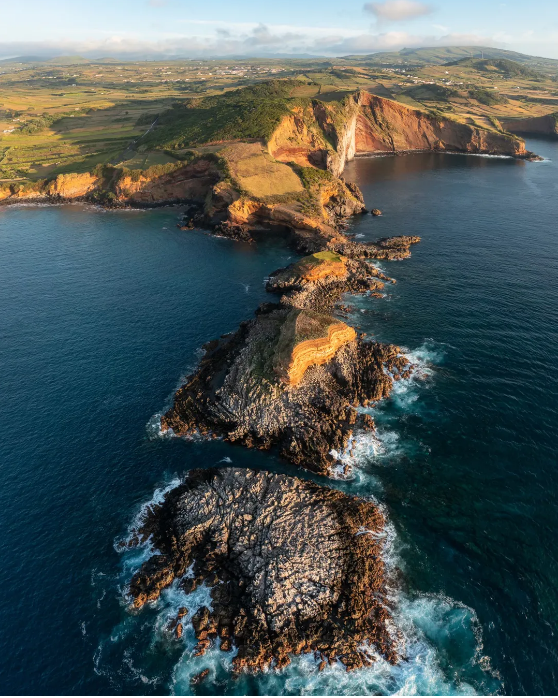
Mateus Simões Pires was born in 1724 in the parish of São Sebastião on Terceira Island in the Azores, the son of Manoel Simões Pires and Maria da Conceição. He came into the world at a time when the islands were experiencing the pressures of a growing population and limited agricultural land. The Azores had been an important part of the Portuguese Atlantic system since their settlement, providing food, livestock, timber, and ports of call for vessels crossing the ocean. Terceira itself was a productive island, but its agricultural economy could not expand indefinitely. As families grew, farms were divided and opportunities for younger generations became increasingly limited. For many young men, the prospect of inheriting enough land to establish an independent household was uncertain. The Portuguese Crown was aware of these pressures and had another problem that could be addressed at the same time. Portugal possessed enormous territories in Brazil, particularly in the south, but much of that territory was sparsely settled and vulnerable to Spanish expansion. The solution was to encourage Azorean families to emigrate to the southern colonies, where they could receive land and provisions while strengthening the Portuguese presence along the frontier.
Mateus grew up in this environment and, as a young man, had to decide whether to remain on Terceira and accept the limitations of island life or take the enormous risk of beginning again across the Atlantic. At approximately twenty-three years of age, he chose emigration. His sister Luciana went with him, and together they joined the stream of Azorean migrants being transported to Portuguese America. The voyage itself was a formidable undertaking. These vessels were not designed for comfort, and passengers were crowded together for weeks or months with inadequate sanitation, limited fresh water and food that could deteriorate during the crossing. There was little opportunity for bathing or changing clothes, and the dampness below deck created an environment in which disease could spread rapidly. Fevers, intestinal infections, pneumonia and other illnesses were common, while scurvy, known among Portuguese sailors as doença de Luanda (Luanda sickness), could become fatal after prolonged deprivation of fresh food. Many migrants who embarked in the Azores never reached Brazil, and those who survived arrived physically exhausted after months at sea. When Mateus and Luciana finally reached Santa Catarina Island, they had completed one of the most difficult journeys a young European could undertake in the eighteenth century, but they had not yet reached the peaceful agricultural life they had imagined. They had entered a frontier where Portugal and Spain were competing for territory and influence, where military settlements were scattered across enormous distances, and where Indigenous communities were defending lands that European empires were attempting to claim.
II: Colônia do Sacramento and the Southern Frontier
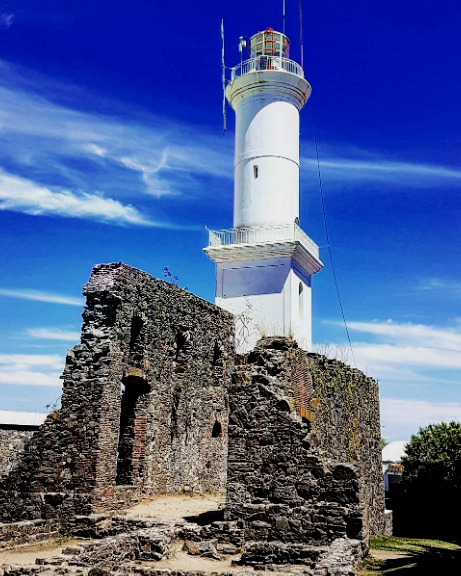
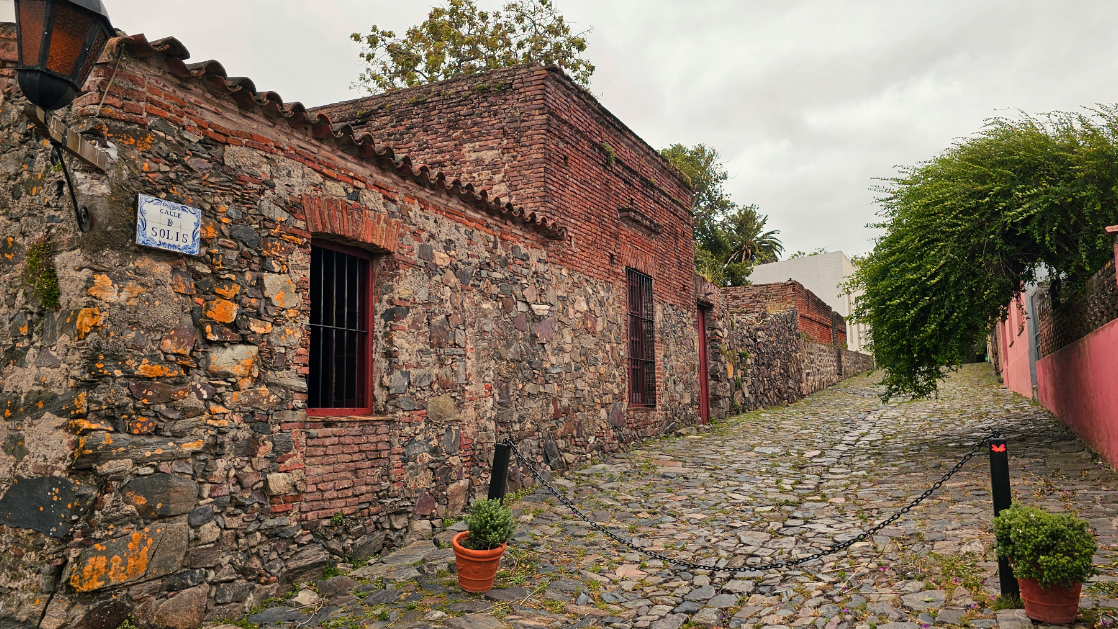
The first years of Mateus’s life in South America were connected with the southern frontier and, according to the family tradition, with Colônia do Sacramento. Founded by Portugal in 1680 on the northern bank of the Río de la Plata, directly opposite Buenos Aires, Colônia was one of the most contested settlements in Portuguese America. Its location gave Portugal access to an important commercial waterway, but it also placed the settlement directly in the path of Spanish power. Buenos Aires was one of the principal Spanish centers in South America, and the Spanish authorities regarded the Portuguese presence at Colônia as a challenge to their control of the Río de la Plata. During the eighteenth century, the settlement repeatedly experienced military pressure, occupations, negotiations and changes in political circumstances. For a young immigrant such as Mateus, this meant that the promised new life was being built in a country where political boundaries were uncertain and where civilians could be displaced by military events without warning. His sister Luciana eventually remained in Colônia, married there and died there, but Mateus moved onward as the circumstances of the frontier changed. The precise details of his early movements are not completely documented, and later family accounts appear to combine several episodes of displacement, but by the middle of the 1750s he was established in the region of Rio Grande and Rio Pardo.
Rio Pardo was becoming one of the most important Portuguese military settlements in the interior. The establishment of the Forte Jesus, Maria, José de Rio Pardo in 1752 gave Portugal a strong position along the waterways leading into the interior and created the nucleus of a growing settlement. A fort, however, could not exist in isolation. Soldiers required food, clothing, animals, tools, ammunition and countless other necessities, while settlers required access to markets and supplies. This created an economy in which merchants could prosper by connecting military settlements with agricultural communities and trading centers farther away. Mateus recognized this opportunity. Rather than depending solely on agriculture, he began developing a commercial operation that connected Rio Pardo with Rio Grande and the Río de la Plata region. He transported goods using large ox-drawn wagons and later by riverboat, taking advantage of the same geographical network that made the region strategically important to the Portuguese military. His position allowed him to supply military establishments as well as civilians, and over time he became a significant merchant in the developing settlement. The frontier was dangerous, but it was precisely the absence of established infrastructure that created opportunities for men who were willing to transport goods across difficult country.
III: The Guaranitic War
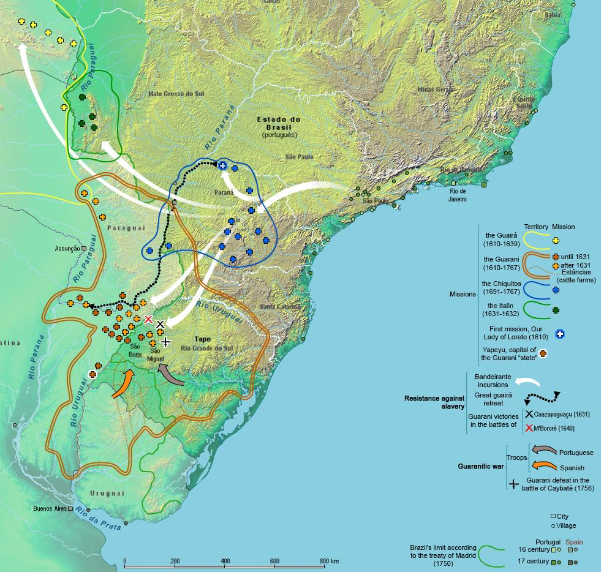
Mateus’s early years at Rio Pardo coincided with one of the most consequential conflicts in the history of the region. In 1750, Portugal and Spain signed the Tratado de Madrid (Treaty of Madrid), an attempt to settle their long-running territorial disputes in South America. Under the agreement, Portugal would surrender Colônia do Sacramento to Spain, while Spain would transfer to Portugal the territory occupied by the Sete Povos das Missões (Seven Peoples of the Missions), a group of Guaraní communities east of the Uruguay River. To the European governments that negotiated the treaty, this was a territorial exchange designed to establish a more clearly defined frontier. To the Guaraní people who lived in the missions, however, the agreement threatened their homes, communities, fields, churches and livestock. They resisted the attempt to force them to abandon their settlements, and the resulting Guerra Guaranítica (Guaranitic War) brought Portuguese and Spanish forces into military conflict with the Guaraní resistance between 1753 and 1756.
One of the principal figures of that resistance was Sepé Tiaraju, a Guaraní leader whose name became associated with the defense of the missions and the struggle against forced displacement. Later tradition would preserve the phrase “Esta terra tem dono” (This land has an owner) as a symbol of the Guaraní claim to their homeland. Whether every later version of the statement represents his exact words is less important than the historical reality behind it. The Guaraní communities were not simply passive inhabitants of a territory being transferred between European empires. They resisted, fought and attempted to preserve their homes. The conflict reached directly into the territory where Mateus had established himself. In 1754, Guaraní forces attacked the Portuguese position at Rio Pardo. The fort survived, but the attack demonstrated how exposed the settlement remained. Mateus was therefore building his business in a landscape where military conflict could appear without warning and where the survival of a commercial enterprise depended partly upon the ability to understand the movements of armies, Indigenous forces, settlers and traders.
That same frontier eventually provided Mateus with a family of his own. In 1757 he married Catarina Inácia da Purificação, a young Azorean woman who, like Mateus, had crossed the Atlantic in search of a new life. Their marriage was performed by procuração (proxy), reflecting the unusual circumstances of the southern settlements, where migration and distance frequently separated families and made conventional arrangements difficult. Catarina was approximately twenty years old, while Mateus was about thirty-three. Their marriage marked the beginning of a household that would become firmly established in Rio Pardo. By then Mateus was no longer simply a migrant trying to survive in a foreign country. He had become a merchant with commercial connections, a husband with responsibilities and a man who was beginning to accumulate the resources necessary to establish a permanent life on the frontier.
IV: Marriage, Commerce, and the Making of a Frontier Merchant
By the late 1750s, Mateus Simões had begun to establish himself as one of the people who made the frontier function. His marriage to Catarina Inácia da Purificação gave him a household, but his commercial activities gave him a position within the wider economy of Rio Pardo. The settlement depended heavily upon its military establishment, and the presence of the Forte Jesus, Maria, José created a steady demand for provisions and other necessities. Mateus understood that the greatest opportunities were not necessarily found in producing a single commodity, but in connecting places that needed one another. The roads were difficult, rivers were important, and the movement of goods required animals, wagons, boats, labor and knowledge of the country. Mateus possessed the willingness to travel and the experience to navigate this system. He began transporting merchandise between the Río de la Plata region, Rio Grande and Rio Pardo, bringing supplies into the interior and returning with products that could be sold elsewhere.
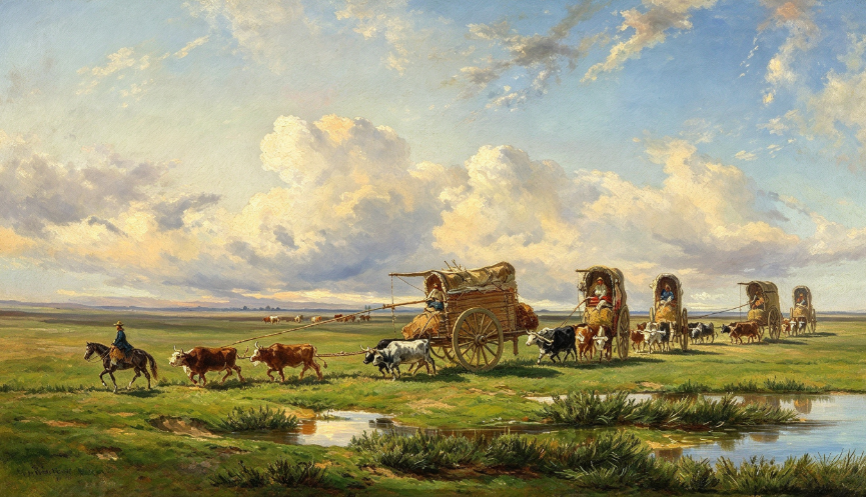
This kind of commerce was particularly important in a region where political boundaries were less effective than they appeared on official maps. Portuguese and Spanish authorities might regard one another as enemies, but merchants, cattlemen and local inhabitants often continued to cross the frontier when there was money to be made. Goods moved along the same roads as military forces, and the difference between a commercial journey and a military expedition could sometimes be a matter of timing. Mateus’s commercial contacts in the Spanish territories were therefore not necessarily a contradiction of his Portuguese identity. They were part of the reality of frontier life. A merchant who depended entirely upon the political boundaries established by governments would have found it difficult to survive. Mateus needed to know where cattle could be obtained, where supplies were available, which roads were passable and which settlements offered markets. His business increasingly depended upon the ability to move through a landscape in which the political situation could change faster than the seasons.
The years following the Guerra Guaranítica (Guaranitic War) brought a temporary reduction in the most immediate military pressures, but they did not bring lasting peace. The Treaty of Madrid itself was eventually annulled, and the territorial disputes between Portugal and Spain remained unresolved. The southern frontier continued to develop through a combination of military occupation, agriculture, cattle raising and commerce. Mateus’s family was growing during these years, and his business was becoming more substantial. He was building something that went beyond a shop or a temporary trading operation. His activities increasingly connected agriculture, transportation, livestock and commerce, creating a diversified enterprise suited to the uncertain conditions of the frontier.
For Mateus, this was also the period in which the meaning of the word “home” began to change. Terceira remained the place of his birth, but Rio Pardo was becoming the place where his future existed. His wife was there. His children would be born there. His business was there. The fort and settlement that had once represented the edge of Portuguese power were becoming the center of his own world. Yet the very forces that had made Rio Pardo an attractive place for him to settle were about to draw the entire region into another war.
V: The Spanish Advance of 1763
The wider European struggle* known as the Guerra dos Sete Anos (Seven Years’ War) eventually reached the Portuguese and Spanish possessions in South America. Portugal was closely aligned with Britain, while Spain entered the European conflict on the opposing side. The old disputes between the two Iberian powers therefore became part of a much larger international conflict. In the southern colonies, the strategic objective was clear. Spain sought to destroy the Portuguese positions that threatened its control of the Río de la Plata, while Portugal attempted to preserve the settlements and communications that connected its southern territories with the rest of Brazil.
The Seven Years’ War (1756–1763) was a massive global conflict (some call it an earlier first world war) driven by imperial rivalry between Great Britain and France, alongside a European struggle over Silesia between Prussia and Austria. Fought across Europe, North America, the Caribbean, India, and West Africa, the war ended with the Treaty of Paris and the Treaty of Hubertusburg in 1763. The conflict fundamentally reshaped the global balance of power, establishing Great Britain as the world’s dominant colonial and naval power at the expense of France, while cementing Prussia’s status as a major European force. Additionally, the immense financial debts incurred during the war prompted British taxation of its American colonies, directly setting the stage for the American Revolution. At the time Great Britain and Prussia fought against France, Austria, Russia, Sweden, and Spain.
The Spanish offensive was led by Pedro de Cevallos, gobernador de Buenos Aires (governor of Buenos Aires), an experienced military and colonial administrator who understood the vulnerability of the Portuguese settlements. In 1763, Spanish forces moved against Portuguese positions in the south and captured Rio Grande. The fall of Rio Grande was a major blow to Portuguese power in the region. The settlement had been one of the principal Portuguese bases on the southern coast, and its loss disrupted communications and forced Portuguese inhabitants and military personnel to retreat. The conflict was not being fought in some distant European theater. It was happening across the roads and settlements through which Mateus conducted his business.
At the worst possible moment, Mateus was returning from the Río de la Plata region with a convoy of ox-drawn wagons carrying merchandise intended for his establishment at Rio Pardo. The journey would ordinarily have been part of the commercial routine that had made him prosperous. Instead, he encountered the consequences of the Spanish advance directly. His wagons and their cargo were seized and plundered. The loss was more serious than the disappearance of a single shipment. A merchant’s business depended upon capital continually moving from one transaction to another. The merchandise in those wagons represented money that had already been invested in the expectation of future sales. Once the cargo disappeared, the capital required to finance the next journey disappeared with it. Mateus had built his livelihood around movement, and the advancing army had interrupted that movement with violence.
The loss appears to have placed Mateus under considerable financial pressure. Yet the experience also demonstrated one of the characteristics that would define his life. He was willing to take extraordinary risks in order to recover what he had lost. Instead of abandoning commerce or retreating permanently from the frontier, he looked across the Atlantic toward the inheritance that awaited him in the Azores. The journey would also provide an opportunity to help other Azoreans who had entrusted him with money to collect from relatives in the islands. Once again, the sea became his road.
VI: The Journey Home
Mateus’s return to the Azores was not the journey of the young immigrant who had left Terceira two decades earlier. He was now an established merchant, a husband and a father, and a man with responsibilities extending beyond his immediate family. The purpose of the voyage was partly personal. He intended to claim an inheritance. But he also carried obligations to other immigrants who had entrusted him with money. Their relatives in the Azores held funds that Mateus had agreed to collect and bring back to South America. The arrangement says something about the position he had achieved among his fellow islanders. He was trusted to travel with money belonging to others, to collect it on their behalf and to carry it thousands of miles across the Atlantic.
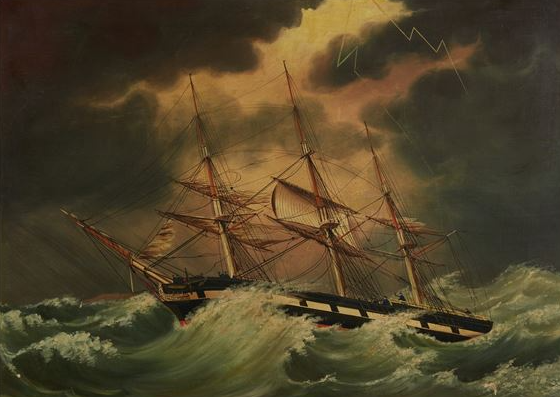
The return voyage must have seemed very different from the first. The young man who had once crossed the ocean searching for a future now sailed back toward Brazil with the resources that he hoped would help restore his financial position. He had already learned that fortune on the frontier could disappear quickly, but he had also learned that opportunities could return just as quickly if a man had sufficient courage and connections. He could not have known that the most dangerous part of the journey was still ahead.
In 1777, while Mateus was returning toward Brazil, Spain launched another major offensive under Pedro de Cevallos. This time Santa Catarina Island itself became the target. The Spanish expedition was considerably larger than the forces involved in the earlier campaigns, and the Portuguese defenses on the island proved unable to stop the invasion. Spanish troops landed, Portuguese positions collapsed, and the island was occupied. Civilians who had expected to return to ordinary life suddenly found themselves living under an occupying army.
Mateus was caught in the invasion. He was arrested, and the money he was carrying was confiscated. The irony was extraordinary. He had crossed the Atlantic to recover an inheritance and to return funds belonging to fellow Azoreans, and the entire fortune was now in the hands of the enemy. The man who had already lost merchandise to the Spanish in 1763 had now lost his own freedom as well. His later petition to the Portuguese authorities recorded the magnitude of the disaster. He stated that he had lost 25,000 cruzados and had spent years in Spanish territory after being taken prisoner. The amount was enormous, particularly when considered alongside the fact that part of the money had been entrusted to him by other people.
Mateus was transported toward the Río de la Plata region. The precise details of his captivity remain less certain than the broader outline preserved in the documentary record and family tradition, but the destination appears to have been within the Spanish sphere of control, eventually bringing him to Montevideo. For a prisoner who had spent decades building relationships as a merchant, those relationships may have become his most valuable possession. Family tradition holds that his commercial connections helped secure his release. Whether every detail of the story can be documented, the basic sequence is consistent with the evidence: Mateus survived his captivity, obtained his freedom and began the journey back toward the Portuguese side of the frontier.
VII: Colônia, Luciana, and the Road Home
After his release, Mateus went to Colônia do Sacramento, the place where his South American life had begun many years earlier. It was there that he found his sister Luciana. The reunion must have been extraordinary. The two had left Terceira together as young people, crossed the Atlantic aboard the same migrant expedition and entered an uncertain world in South America. Their lives had subsequently taken different paths. Mateus had moved toward Rio Grande and Rio Pardo, while Luciana remained connected to Colônia, where she married and eventually established her own household. Now, after decades of separation, Mateus returned to the colony as a man whose fortunes had been repeatedly overturned by the wars of the frontier.
Luciana helped him prepare for the journey home. According to the family tradition, she provided him with horses and an enslaved person to accompany him. Mateus then began the long journey toward Rio Pardo. The road ahead would have been difficult even under peaceful conditions. Distances were great, rivers had to be crossed, roads were often little more than tracks through the countryside, and the security of travelers could never be assumed. For Mateus, however, the journey had an additional significance. He was returning not as the prosperous merchant who had left Brazil but as a man who had suffered imprisonment and the loss of an enormous fortune. He did not know exactly what remained of his business or how his family had managed during his absence. He knew only that Catarina and his children were waiting for him.
When Mateus finally reached Rio Pardo, he had survived another chapter of a life that had repeatedly brought him to the edge of ruin. Yet the frontier had changed while he was away, and his own position within it had changed as well. He still had his family, his experience, his commercial knowledge and the reputation he had built over decades. More importantly, he had a son who was now old enough to become involved in the family enterprise. Antônio Simões Pires, born in Rio Pardo in 1766, would eventually become an important figure in his own right. The business that Mateus had created was therefore not simply a means of supporting himself. It was becoming an inheritance that could pass to the next generation.
VIII: Rebuilding the Fortune
The loss of 25,000 cruzados could have ended Mateus’s career. For many men, such a loss would have meant permanent insolvency. Mateus instead began rebuilding. He returned to commerce, agriculture and livestock and gradually reconstructed the network that had made him prosperous before the Spanish invasion. His activities became increasingly diversified. He dealt in cattle and horses, participated in the movement of mules toward São Paulo and maintained connections with merchants in Rio de Janeiro. He also developed agricultural production and other enterprises around Rio Pardo. His business was no longer dependent upon a single journey or commodity. He was creating a broader economic base capable of surviving the uncertainties of the frontier.
The mule trade was particularly important to the development of southern Brazil. São Paulo and the interior regions depended heavily upon animals for transportation, and the great routes carrying mules northward became important commercial arteries. The southern plains provided ideal conditions for raising livestock, and men who controlled herds and transport networks could accumulate substantial wealth. Mateus understood how these systems connected. He was not simply selling goods in a shop. He was participating in the movement of animals, agricultural products, imported merchandise and provisions across a region whose economy was expanding rapidly.
By the final decades of the eighteenth century, Mateus had become a substantial figure in Rio Pardo. His property included agricultural production, a flour mill, commercial activities and livestock. He was also increasingly involved in the acquisition of land. The transformation was remarkable when measured against his beginnings. He had arrived from Terceira as a young immigrant whose principal asset was his willingness to work. He had endured disease at sea, displacement on the frontier, military attacks, the destruction of his merchandise, imprisonment and the loss of a fortune. Yet each time his circumstances collapsed, he rebuilt. His story was therefore not simply one of wealth. It was a story of resilience within an economic system that rewarded those who could adapt to instability.
IX: The Sesmaria
In 1792, Mateus petitioned the Portuguese authorities for a sesmaria (land grant). His petition provides one of the most valuable documentary windows into his life because it allows us to hear something close to Mateus’s own account of his circumstances. He described himself as a resident of the military district of Rio Pardo and referred to his experience as a merchant and livestock owner. He also described the enormous losses he had suffered during the Spanish invasion, including his imprisonment and the loss of 25,000 cruzados. His request for land was therefore not simply a desire for additional property. It was part of the process through which a successful frontier settler sought to secure his position and rebuild the wealth that war had taken from him.
The granting of a sesmaria also reveals something larger about Portuguese colonial policy. Men such as Mateus were valuable to the Crown because they transformed frontier territory into productive and defensible settlements. A landowner with cattle, agricultural production, commercial connections and a household contributed to the permanent occupation of territory. His economic success therefore served an imperial purpose. The Crown wanted the southern frontier populated by people who would cultivate it, defend it and connect it economically with the rest of Portuguese America.
Mateus had begun his life as one of those people being moved into the frontier.
Now he was one of the men who helped anchor Portuguese society there.
X: The Price of Prosperity
There is, however, another part of Mateus’s story that cannot be separated from his success. Like much of the eighteenth-century Brazilian economy, his household and wealth were connected to slavery. The surviving inventories demonstrate that enslaved people formed a substantial part of his property. Catarina’s inventory after her death in 1817 recorded sixty-two enslaved people, whose assessed value represented a large proportion of the total estate. These men, women and children were not simply an abstract economic category. They were individuals who lived, worked, married, raised children and experienced the constraints and violence of slavery within Mateus’s household and community.
The records preserve fragments of some of their lives. Enslaved people belonging to Mateus formed families and were married in the parish church of Rio Pardo. Among them were Paulo Guiné and Lucrécia Guiné, whose marriage was recorded in 1805. Other records reveal children born to enslaved couples over a period of many years. Some individuals eventually received freedom from Mateus, including Josefa Guiné, who was manumitted in 1814, and her daughter Joana, who received her freedom in 1817. These records remind us that the story of Mateus’s prosperity cannot be told only from the perspective of the man who owned the property. His wealth was also part of a society in which enslaved labor was fundamental to agriculture, domestic life and economic production.
This contradiction is essential to understanding his life. Mateus had himself experienced displacement and captivity, yet he became a slaveholder. He was a migrant who had suffered from the actions of empires and armies, yet he became a beneficiary of a colonial system built upon land acquisition and enslaved labor. His story should therefore neither be reduced to that of a heroic pioneer nor stripped of the realities of the society in which he prospered. He was a man of his time, and his life contains both the extraordinary difficulties he endured and the privileges he eventually acquired.
XI: The Old Merchant of Rio Pardo
By the beginning of the nineteenth century, Mateus had lived through almost every major transformation of the southern frontier during his lifetime. The world of his youth had been dominated by Portuguese and Spanish rivalry, but the political map was beginning to stabilize. Treaties such as the Tratado de Santo Ildefonso (Treaty of San Ildefonso) in 1777 attempted to establish more durable boundaries between the two empires. The immediate military crises became less frequent, although the frontier remained a heavily militarized and economically active region. The settlements that had once seemed temporary were becoming towns, and the families brought from the Azores were becoming established generations of southern Brazilians.
Mateus was now an old man. The young immigrant who had crossed the Atlantic in 1747 was almost impossible to recognize in the wealthy landowner and patriarch he had become. He had accumulated land, livestock and commercial property, and his family had become established within the society of Rio Pardo. His son Antônio was taking an increasingly important role in the family’s affairs, and the experience and resources accumulated by Mateus were passing into the next generation. What had begun as a desperate search for land had become a family enterprise with roots deep in the southern Brazilian frontier.
Mateus also contributed to the religious and civic life of the community. The construction of the Capela de São Francisco de Assis (Chapel of Saint Francis of Assisi) in Rio Pardo began in 1806, and the chapel was inaugurated in 1812. Mateus was among those who contributed to its construction. By this point, his relationship with Rio Pardo was no longer that of an immigrant who happened to live there. He had become one of the people who helped shape the community itself.
XII: The Last Years
Catarina Inácia da Purificação died in 1817. By then, she and Mateus had spent roughly six decades together, raising their family through wars, commercial crises, migrations and the gradual transformation of the frontier into an established society. She had shared with him the years of prosperity as well as the periods when armies destroyed what they had built. She had remained in Rio Pardo while Mateus was imprisoned by the Spaniards, and she had helped preserve the household during his absence. Her death marked the end of one of the great partnerships of Mateus’s life.
Mateus himself survived her by only a few years. He died in Rio Pardo in 1819, reportedly from typhus, at approximately ninety-five years of age. By then, the world into which he had been born had changed almost beyond recognition. When he was born in 1724, Portugal and Spain were still contesting the boundaries of their South American empires, and the lands around Rio Pardo were only beginning to be incorporated into permanent Portuguese settlement. When he died, the generation of pioneers was giving way to their children and grandchildren. The frontier was becoming a homeland.
If we measure Mateus’s life by the events that happened to him, it seems almost unbelievable. He crossed the Atlantic as a young immigrant and survived the voyage. He lived in a disputed colony. He experienced the wars of the southern frontier and the Guaranitic resistance. He established himself as a merchant. He lost his wagons and merchandise during the Spanish campaign of 1763. He crossed the Atlantic again in search of an inheritance. He returned carrying money entrusted to him by fellow immigrants and was captured during the Spanish invasion of Santa Catarina in 1777. He lost 25,000 cruzados, endured captivity and eventually returned to Rio Pardo. He rebuilt his fortune, acquired land, raised a family, expanded his commercial interests and became a substantial landowner.
Yet perhaps the most important part of his story is not that he survived these events individually. It is that he continued to rebuild after each one. The frontier repeatedly took something from him, but each time he found a way to begin again. His life therefore mirrors the history of the region itself. The southern frontier was repeatedly invaded, reorganized, contested and rebuilt. Settlements were destroyed and reconstructed. Borders moved. Treaties were signed and broken. Armies came and went. People were displaced and new communities were established. Through all of this, ordinary people created the farms, businesses, families and institutions that eventually turned a contested borderland into a permanent society.
Mateus Simões was one of those people. He did not shape the frontier through military command or political authority. He shaped it through persistence, commerce, landholding, family and the daily work of making a life in a place where no life was guaranteed. His story is therefore not simply the story of an Azorean immigrant. It is the story of a man who spent almost an entire lifetime at the edge of empires and who, through a combination of courage, opportunity, hardship and endurance, transformed that frontier into his home.
Chronology of Mateus Simões
| Year | Approx. age | Event |
|---|---|---|
| 1724 | 0 | Born in the parish of São Sebastião, Terceira Island, Azores |
| 1747 | 23 | Leaves the Azores with his sister Luciana for Portuguese America |
| 1748 onward | 24+ | Arrives in Santa Catarina and becomes associated with the southern frontier |
| 1750 | 26 | Portugal and Spain sign the Tratado de Madrid (Treaty of Madrid) |
| 1753 to 1756 | 29 to 32 | Guerra Guaranítica (Guaranitic War) |
| 1754 | 30 | Rio Pardo attacked during the Guaranitic conflict |
| 1757 | 33 | Marries Catarina Inácia da Purificação |
| 1763 | 39 | Spanish forces under Pedro de Cevallos capture Rio Grande; Mateus loses wagons and merchandise |
| 1760s | 40s | Expands commercial and livestock activities |
| 1777 | 53 | Spanish invasion of Santa Catarina; Mateus is arrested and loses approximately 25,000 cruzados |
| Late 1770s | 50s | Released in the Río de la Plata region and returns to Rio Pardo |
| 1792 | 68 | Petitions for a sesmaria (land grant), documenting his captivity and financial losses |
| 1806 | 82 | Construction begins on the Capela de São Francisco de Assis |
| 1812 | 88 | Chapel inaugurated |
| 1817 | 93 | Catarina Inácia da Purificação dies |
| 1819 | 95 | Mateus Simões dies in Rio Pardo |
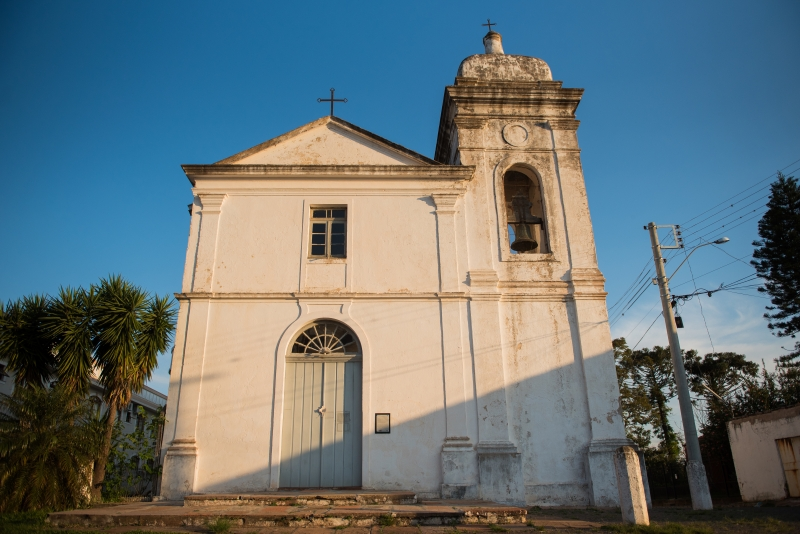
Commenced in 1785 by Azorean builders Manuel de Macedo Brum and Matheus Simões Pires.