A historical fiction of the Urdanegui and the children of the Inca
General of the South Sea
I. Callao, 1668
The tide came into the port of Callao smelling of tar, salt, and blood. Not fresh blood. The old kind, dried into the timbers of a thousand ships, the kind a man stopped noticing after twenty years of breathing it.
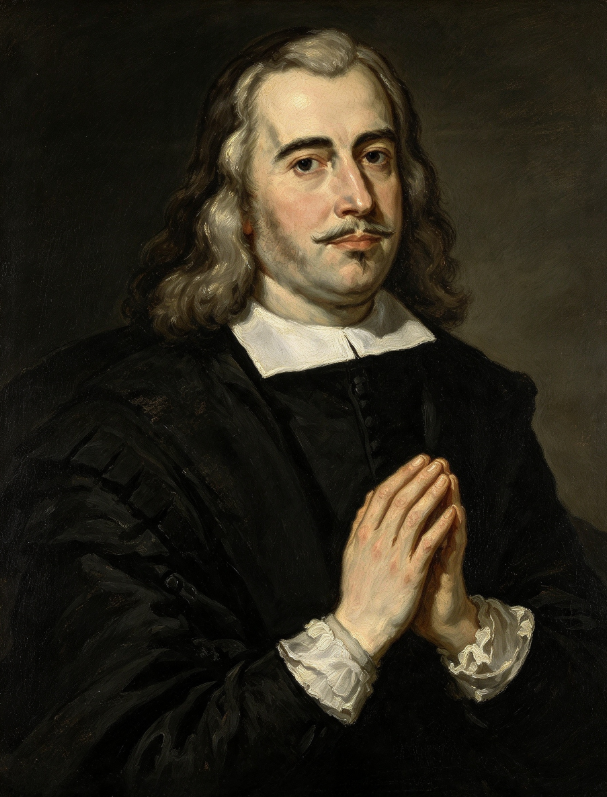
Juan de Urdanegui y López de Inoso stood on the quarterdeck of the Nuestra Señora de la Encarnación (Our Lady of the Incarnation) and watched the porters carry his silver down the gangplank. Forty bars of it, wrapped in rawhide, each bar stamped with the mark of the royal mints of Potosí (the great silver mountain of the viceroyalty). Some of that silver had traveled on muleback from the mines, down the terrible road to Arica, up the coast in the holds of ships like this one, ships he had commanded for thirty years. He had been a soldier once, a boy of eighteen standing a musket on these same decks, sick with fear in the fog off Cabo de Hornos. That boy was dead. What stood on the quarterdeck now was a general of the Armada del Mar del Sur (the Fleet of the South Sea), governor of the royal presidio of Callao, administrator of its customs, a man whose word could empty this harbor or fill it.
He was forty-nine years old and in four days he would be married.
“General.” His mayordomo (chief steward) stood at his shoulder, quiet as a shadow, the way he always did. Don Sebastián Topa Atauche was a man of perhaps sixty, straight-backed, with gray braids and a face the color of good leather, and eyes that held a stillness the Spaniards of Lima could never read and never trusted. He had come into Juan’s household eleven years ago, sent from Cusco by the rector of the Jesuit college there with a letter of introduction and nothing else. Juan had asked him once, only once, what a man of his name was doing serving another man’s table.
“Surviving, mi general (my general),” Sebastián had said, and that had been the end of it for a decade.
Juan had learned things anyway. Lima talked. It was a city built on talk the way it was built on adobe (mud brick). Don Sebastián was Inca. Not mestizo (of mixed Spanish and Indian blood), not a cholo (an Indian who had taken to Spanish dress), but Inca, of the blood of the orejones (the “big ears,” the Inca warrior nobility), a man whose grandfather had held the canopy over the Host at Corpus Christi in Cusco with the other nobles of the Indian cabildo (town council), a man whose family had been lords in the valley of the Yucay before Pizarro. That dynasty of kings had ended on a scaffold in the plaza of Cusco in 1572, when the last Inca of Vilcabamba had been beheaded by the viceroy’s order while ten thousand of his people wept and the friars baptized him in the name of the God who had failed to save him. His descendants did not die, though. They had married into Cusco, into its parishes and guilds and grain trade, and now they sat in churches with their hats on and their coats of arms on the walls, Spanish heralds quartered with the rainbow of the Inca, and they sued each other in the royal courts over lands their great-grandfathers had held by right of the sun itself.
“You have that look, mi general,” Sebastián said. “The look of a man reviewing his sins.”
“Forty bars, Don Sebastián.” Juan did not look at him. He watched the porters stagger under the rawhide. “Weighed at the customhouse this afternoon, and tomorrow the King’s fifth goes into the strongboxes of Callao, and from there to Panama with the fleet under my flag, and across the isthmus by mule, and to Portobelo, and to Seville. A river of silver, and I am one of its locks.”
“And a rich lock grows richer.”
Juan laughed, short and hard. “I am forty-nine and I am about to marry the daughter of a gentleman of the late King’s bedchamber. My father was a Basque of the mountains, a man of a stone house in Orduña who wrote me letters I could barely read because no one taught him letters either. Now the King has given me the habit of Santiago, and I bought it, and I will buy a title next, Sebastián, and after me my son will be a marquis and his son will forget that the silver was carried on the backs of Indians who die at twenty in the mines of Potosí.” He turned. “Is that clear enough of a review? Or should I continue to the slave deck?”
Sebastián’s face did not move. The Encarnación had made two passages of the year carrying what the merchants called piezas (pieces), human cargo, bozales (Africans newly landed and unacculturated) bought at Cartagena and carried south to the plantations of the coast. Juan had put a stop to it two years ago. Not because his conscience had torn at him. Because Constanza’s family had smelled it on him, faintly, the way one smells a drain, and had asked one question too gently.
“Do not fear the account books, mi general,” Sebastián said. “Fear the other ledger. My people kept one. The sun sees everything. He keeps very patient accounts.”
“You talk like a Jesuit.”
“They taught me their schools of talking, and I taught them ours.” Something that was almost a smile moved in the old man’s eyes. “They are not so different. Both faiths believe the world was ruined by men who loved silver more than they loved the light.”
Down on the mole, a rider from Lima was dismounting in a spray of dust, a groom of the Oviedo household in the red-and-gold livery of a house Juan was four days from belonging to. The rider took off his hat and looked up at the ship as if he knew exactly where to look.
“The wedding gifts arrive,” Sebastián said. “Lima is happy. Lima loves a general who marries money and a woman who marries rank, because such marriages are the only alchemy the city permits.”
“Alchemy.” Juan took the word and turned it over. Forty years before, in Orduña, a boy who could barely write had apprenticed himself to a notary to learn his letters, then jumped a ship at Portugalete, then stood watches and hauled lines and learned cannon and learned men, and every year the alchemy compounded. “It is a poor kind of gold, Sebastián, that is made from other men’s sweat.”
“All gold is made that way,” Sebastián said. “It is the only kind there is. My ancestors had a mountain of it, they called it the sweat of the sun. I have sometimes wondered if the Spaniards who first came here understood what my people meant, and I have concluded they did not. They heard only the word mountain.”
The rider was climbing the gangway now. Juan put on his coat, the black coat with the red cross of Santiago that all Lima knew. The alchemy of the coat was the purest of all. It cost four thousand ducados (Spanish gold coins) in fees and proofs and perjuries and bribes, and it transformed what a man was born as into what a man had purchased the right to appear. Below him the silver went into the customhouse, and the tide went out over the drowned pilots’ stakes, and Don Sebastián Topa Atauche, lord of nothing now, folded his master’s cloak over his arm as a servant does, and both of them went down into the city of the viceroys.
II. The Bride
Constanza de Oviedo Luján y Recalde was twenty-two years younger than her husband and in no way deceived by him. She had married him with her eyes open, in the church of San Marcelo, on the fifth of November of 1668, and her dowry was her family, which in Lima was worth more than silver. Her father, dead these twenty-four years, had been Francisco Sigoney y Luján, a Brussels man’s son who had come out to Peru with the gentility of the bedchamber and ended his days a general too, of the land, corregidor (royal district governor) of Oruro and Huancavelica, a man who understood that the Indies forgave everything except lack of credit. Her mother was of the Recaldes, an oidore’s (high court judge’s) daughter, Lima to the bone.
She learned the household in a month and ran it in two. She learned the mayordomo in a single evening.
“Do you know what I have observed, Don Sebastián?” she said, one Sunday, while Juan stood in the patio with the Jesuit fathers who were always underfoot now, drinking chocolate and talking of schools. “My husband has given the Society of Jesus more than one hundred thousand pesos. For their altars, their silver, their church of San Pablo. And you, who arranged every delivery, down to the last candlestick, and who are a lord of Cusco reduced to carrying a ledger, never once in two years have I heard you ask the Society for anything for yourself.”
They were standing in the gallery, out of the sun. Below, Father Marcos, the Procurator, gestured with a soft hand at the arches as if he already owned them, and Juan nodded, listening, the general of a fleet listening to a priest.
“The Society has given me a great deal, señora,” Sebastián said.
“It gave you the delivery work. That is not what I meant.”
“No, señora.” He was quiet a moment. Below, a slave was refilling the chocolate, and the smell of it drifted up, bitter chocolate, vanilla, and the pipes of the footmen. “My wife died of the smallpox in the year the pirates burned Veracruz. My son died at nine, of a fever, because the physician of Cusco would not come to the Indian parish of San Blas until three days after he was called, and then it was the bleeding that killed him. I have one child left. A daughter, Isabel. Her mother’s family were weavers, keepers of the cumbi (the fine cloth of the Inca nobility), poor now, and coca traders in the valley of Lares. I ask the Society for nothing, señora, because there is nothing they can give me that is not already mine.”
“Which is?”
“A pride that the King’s assayers would find suspect,” Sebastián said, and bowed, and she saw, for one moment, before he folded himself back into the servant, the noble of Cusco standing in the patio of her husband’s house, regarding the whole apparatus of Spanish Lima, the cross and the ledger and the habit and the title, with the tolerant contempt of a man watching children play at being lords of a garden that was never theirs.
She thought of it often afterward. Especially the day, three years on, when it all came loose.
III. The Deed
In March of 1672, in the city of Lima, before the notary Pedro Arias, a deed was drawn and signed. Juan de Urdanegui gave the Society of Jesus forty thousand pesos of silver, placed in Seville, to found a college in Orduña, the town of his birth in the Basque mountains of Vizcaya, an endowment for the education of its sons, and ten thousand more for the fabric of its church, and ten thousand in jewels of silver for the worship of God, and further sums for orphan girls’ dowries, for the relief of prisoners held for debt, for wheat to be stored against famine. The Father General of the Society in Rome had given his license through the Provincial of Castile. The ink dried. The papers went into the world.
Juan came home that night and could not sleep.
Sebastián found him on the roof terrace, in the cold, at the hour when Lima is a gray animal sleeping under the garúa (the sea fog of the Lima winter), and no candle was lit anywhere in the house because everyone was asleep or pretended to be.
“Forty thousand pesos to educate the sons of Orduña,” Juan said. He did not turn around. “Tell me, Don Sebastián. In all your years among the Jesuits of Cusco, how many sons of the curacas (native chiefs) were in their schools?”
The old man was quiet. Below them in the dark, a watchman sang out the hour.
“The college of San Borja,” Sebastián said at last. “It was founded for the sons of caciques. The Company taught them Latin and doctrine and Castilian, that they might govern their peoples as the King’s good subjects, and it taught their fathers that a Christian Indian who reads should still remove his hat to a Spaniard who cannot.”
“That is not an answer. That is a ledger.”
“All questions in this viceroyalty are ledgers, mi general. You have built schools in the mountains of your birth because you were a poor boy there who was taught his letters by a notary. You have not built one in the mountains of Cusco, where my daughter’s children live, because you did not stand barefoot there. It is not a sin. It is only arithmetic.” He moved, then, and stood at the parapet beside Juan. The fog was tearing. Far off toward Callao there was a light, the presidio light, Juan’s light, the light of his garrison, and out in the black of the Pacific lay the route of the silver, Callao to Panama, that no pirate had ever broken while his fleet held it.
“There is a thing,” Sebastián said. “It is not mine to give, and I would not give it. But I will show it to you, because you are a man who keeps his debts.”
They went down through the sleeping house to the room that Juan had never entered, the steward’s room at the back of the slaves’ court. From a cedar box wrapped in a woolen cloth of a weave Juan had never seen outside a museum of the viceroys’ loot, the old man took a disk of gold the size of a hand-mirror. It was the sun of the Inca, the inti (sun), worked in the old style, the rays in pairs, a face of beaten gold with slits for eyes that no living artisan of the coast could have cut. It had no shine at all. It was the one piece of royal gold in Peru that had not been melted, and it had not been melted because no one had ever found it, and the reason no one had found it was that the man before whom it now stood was a servant in the house of a general, and who searches a servant?
“You could buy a fleet with that,” Juan said. His voice was not entirely his own.
“I could not, mi general. A man who sold it could buy his own scaffold and the rope besides. It belongs to no one alive. It belongs to the lineage of the Inca, who are not dead, whatever the viceroy of 1572 believed. It will go to my daughter Isabel. And after her, to her children, and it will go on going, past the King’s titles and your college and every last piece of silver in Potosí, because gold of this kind does not pay debts. It keeps them.” He wrapped it again, and the cedar lid closed on it like the lid of an eye. “Now you have seen it. Now you are one of perhaps ten living men who know it exists. You may denounce me to the Inquisition, whose alguacil mayor (chief bailiff) you will one day be, or you may finish your chocolate and go to bed. It is all one to me.”
“Why show it to me?”
“Because you cannot sleep for guilt, mi general, and because you are about to become what this city calls a great man, and because a man should see the sun once before he spends his life buying its shadow.” Sebastián pushed the box back under the cot with his foot, and stood, a servant again, hands folded. “And because in four years I will ask you for something. Not money. A favor that will cost you nothing and mean everything. And you will grant it, and you will never know why, and it will be the best deed of your life. Sleep now. The fog is lifting.”
It lifted. Lima woke, bells and mules and the cries of the tamale women, and in the great house of the Oviedo alliance the chocolate was made and the general of the South Sea fleet slept like a child.
IV. The Alcalde
In January of 1679, the cabildo of Lima, in its masked and murmured arithmetic of great families, elected Juan de Urdanegui y López de Inoso, knight of the Order of Santiago, alcalde ordinario (ordinary magistrate and mayor) of the city of the kings, of the second vote. He took the baton from Francisco Delgadillo and took the oath and moved into the year of his life that he would remember when all the fleet years blurred together, and not one of the memories was silver.
There was the drought year grain riot he settled with the pósito (municipal granary) ledgers open on the table of the audiencia (high court), letting the crowd’s own caciques read the entries aloud in the plaza until the crowd, understanding at last what it had been told a hundred times, went home. There was the night watch he reformed after the fire in the street of the bakers. There were the petitions, and the licenses, and the endless sittings, and his signature at the foot of them, the fast, cramped Basque hand that had belonged once to a boy copying a notary’s formulas for two years of his life.
And there was the case of Julián.
In March of that year, in the court over which the alcalde of the second vote presided, the case came in on paper as a simple matter. The religious of the Company of Jesus, of the hacienda (estate) La Calera, against Julián, negro esclavo (Black slave) of the said hacienda, on the charge of attempted homicide of one of the friars. Declarations were taken. There was a knife. There was a wound in the shoulder, not mortal. There was a boy of seventeen who had run for three days through the coastal hills before the dogs of the mayordomo brought him down, and who now stood in the court of the knight of Santiago with his wrists bound, understanding perhaps one word in three of the Castilian spoken around him, waiting for the verdict Juan had known before the file was opened, because the sentence in such cases had the regularity of the tide.
Juan read the declarations twice. The friar struck him, said one witness. Another said the wound was in the shoulder because the friar turned. The youth had come from Angola as a child on one of the very ships Juan had convoyed and sold and stopped selling. The file had, in the place of the youth’s own words, a notary’s sentence stating that the accused had nothing to say.
Nothing to say. Three days through the hills with the dogs behind him, and he had nothing to say, because no one had ever asked him anything in a language in which he had been taught a word for yes.
“Leave the room,” Juan said to the notary. The room emptied of everyone but the clerk, the friar’s proxy, the guard, and the bound boy. Juan came down from the bench. He took off his hat, which no one in Lima had ever seen him do before a slave, and he spoke in slow Castilian, one word at a time, and then he sent for the Black man who kept the hospital of the Brothers of San Juan de Dios, who spoke the Angolan tongue of the coast, and had him ask again.
What came out, in the hour that followed, in that court, through that interpreter, was not simple. It was a life. And when it was done, the law of the viceroyalty had not moved by one inch, because the law did not deal in lives, only in cases, and the case was assault on a religious by a slave, and the penalty was the galleys and afterwards the auction block.
The sentence was pronounced in the plaza with the viceroy’s consent and mercy commuted to a flogging and the return of the youth to the estate. The friars went home satisfied that their honor had been vindicated. The alcalde of the second vote went home to the house of the Oviedo alliance and stood on the roof terrace in the fog and was not the same man.
Sebastián found him there, as on the night of the deed.
“Four years,” Sebastián said. “You remember. The favor.”
“Ask it.”
“My daughter Isabel is dead these two years. The coca trade died with the famine. Her husband’s family in Lares is finished, and there are debts, and where there are debts in an Indian town there is the corregidor, and where there is the corregidor there is the mita (the forced-labor draft), and her son Cristóbal is eleven years old. I ask you to take him in. Not as a servant. As a page. Educate him with your sons. Letters, Latin if the fathers will have him, the trade of a gentleman. He is of the blood of the Inca on two sides, and it will all be wasted, mi general, every drop of it, in the mountains, unless one door is opened.”
Juan looked at the old man for a long time. Somewhere below, in the slaves’ court, a woman was singing in a tongue of Angola, quietly, a lullaby. The light of the presidio of Callao was a faint star in the fog.
“I stood in that court today,” Juan said, “and pronounced a sentence that is written in the laws of my King and of my God, and it was just, and I have never in my life done anything that has made me wish more to be dead. And you ask me for a door.” He turned away toward the parapet. “Send for him. He arrives on the next coaster from Arica. He will have a room in the upper gallery, next to José Félix, and a tutor, and if the fathers of San Pablo will not take an Indian boy, then the fathers of San Pablo can return my forty thousand pesos with the interest of my displeasure.”
Sebastián said nothing for a moment. Then he did something Juan had never seen him do. He went down on one knee, and then on both, there in the fog on the terrace of a Spanish knight, and pressed the hem of Juan’s cloak to his forehead in the old way, the salute of the orejones to a lord who had done a great thing for their line, and rose, and was gone down the stair before Juan could find any words at all.
V. The Vows
The boy came to Lima in the spring of 1680. Cristóbal Topa Atauche was small for eleven, with his grandfather’s stillness and his mother’s sharp eyes, and he was installed in the upper gallery of the great house between the nursery and the schoolroom, and Lima, which never failed to notice anything, noticed.
Constanza was the shield. Constanza, whose signature stood on the marriage contract of the most debated alliance of the decade, met the drawing whispers with a serene Castilian smile and a question about the health of the whisperer’s credit. José Félix, the heir, then three years old, adopted the new page as a large and wonderful toy, and Cristóbal carried him on his shoulders through the orange trees until the English pirate stories came true in the child’s eyes and he screamed with joy.
The old general of the fleet was at the summit of his life. His ships held the coast. The King confirmed his posts. The title he had been angling for, the marquisate, sat in the offices of the Council of the Indies in Madrid, ripening like a fruit he could feel with his fingertips through eight thousand miles of ocean and paper. He had never been richer, and he had never been quieter.
In the year 1682, having handed the baton of the alcaldía to Fernando Perales, he began to be seen more and more at the professed house of the Society. The Fathers received the general of the South Sea with the warm discretion of men receiving a benefactor who has begun, gently, to want to talk about his soul. What was said in those rooms is not written in any file, but its sense escaped anyway, as such sense always does. The notaries of the Company took down the clause in March: the permission of the wife, given freely, in the presence of witnesses, for what she was asked to permit. And the Bishop was informed, and the novitiate master, and on a day in that same year, in the house of the Fathers at Lima, Don Juan de Urdanegui, knight of Santiago, general, governor, alcalde, merchant, sinner, made the profession of the three vows of a coadjutor brother of the Society of Jesus, poverty, chastity, and obedience, and put off the black coat with the red cross for the black cassock of a lay brother, and the room, it is recorded, was full of the elite of Lima, who had come to see a great man make of himself a servant, and who left in silence.
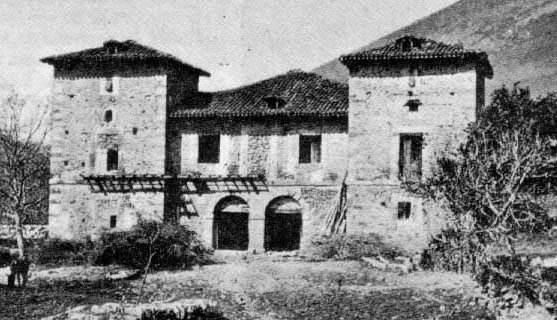
He lived four months of that life. He swept the Fathers’ refectory and scrubbed the kitchen of the professed house, this man who had commanded the sea, and he wrote one letter in those months that was not preserved among the Company’s papers. It was written on a single sheet in the fast, cramped Basque hand, folded, sealed with wax, and given not to the rector but to an old Indian brother of the house, Don Sebastián’s last countryman in Lima, with instructions in the Castilian of the courts. It was addressed, in Quechua transliterated into Castilian letters, to a boy.
On the sixteenth of November of 1682 he died in Lima, in the Society’s house, with the vows four months old on his lips. Weeks afterward, the royal decree crossed the ocean and the title of Marqués de Villafuerte was declared for his heir, and Lima, which had watched him buy his way upward for forty years, agreed that he had in the end jumped categories entirely, from merchant to marquis to saint, a progress the city found excessive and secretly admirable, the way it admired its own earthquakes.
They buried the founder with pomp. In the mountains of Orduña, the college rose on his silver, and the sons of his town went in through its doors. And in Lima, in the great house on the Oviedo side, a boy of thirteen stood at the funeral in the black of a page, the only Indian in a gallery of hats and swords, holding the hand of the little marquis, his friend, his master’s son, and felt in his shirt, against his chest, the weight of a letter and, wrapped beside it, a small hard disk that was not silver.
The Rising
VI. Tinta, November 1780
The mule train came down into the valley of Tinta in the blue cold before the dawn, and Doña Mariana Urdanegui y Topa heard the bells of the church of Pampamarca strike five as she wrapped her ruana (Andean wool cloak) tighter and rode out through the gate of the hacienda of her cousins, the Nogueras.
She was thirty-two years old, widowed, a woman of the two bloods, and in the district of Tinta, in that autumn of 1780, no one needed to be told which blood counted. Her great-grandmother’s great-grandfather had ridden out of Lima with a fleet general’s silver behind him. Her mother’s line went down through the weavers of Lares and the Topa Atauche of Cusco, the Inca nobility of the cabildo, the men who had carried the canopy at Corpus Christi for two hundred years with Spanish coats sewn over their hearts and the rainbow flag folded in their chests. From one line she had a document and a disk of gold. From the other she had a face the mountains recognized. Between the two she had survived her whole life in the fold of the world where the Spanish world and the Indian one rubbed together and caught fire.
Her cousin José Gabriel was waiting for her at the gate of the church. He was standing in the dark under the bell tower with his hat off, which he never was in public, and that was the first thing that frightened her.
“Little cousin,” he said. “You came.”
“You sent three riders in two days, Gabriel. Yes, I came.” She did not dismount. Around them, in the plaza of Pampamarca, there were Indians gathered who should not have been there, silent, hundreds, with slings hidden in their ponchos, and there were no women, and there was a fire burning in the patio of the cabildo where no fire should burn at that hour. “What have you done?”
“Justice,” he said. “The corregidor Arriaga is dead. Last night. It is done, and it cannot be undone, and I will not lie to you, of all people, by pretending otherwise.”
Antonio de Arriaga, corregidor of the province of Tinta, magpie, drunkard, seller of forced textiles at double price, taker of the mita’s children for the silver of Castrovirreyna, a man whom the audiencia of Lima had fined and transferred and fined again, was dead. She looked across the plaza at the Indians in the dark and understood, in one of those falls of understanding that are physical, like ice poured down the spine, that this was not a riot.
“You called yourself,” she said. “The name.”
He put his hat back on. In the square, one of the men near the fire turned and looked at the two of them and bowed, not in the Spanish way, but with both hands, knuckles to the forehead, the old way.
“Túpac Amaru,” her cousin said. “José Gabriel Condorcanqui, cacique (native chieftain) of Surimana, Pampamarca, and Tungasuca, is dead. He died when they hanged his ancestor in the plaza of Cusco. I am Túpac Amaru the second, of the blood of Manco, of the blood of the last Inca of Vilcabamba, and I am not rebelling against the King, Mariana, whatever the corregidores have told you, and I am not raising the Indians against the Spaniards. I am raising the kingdom. For the King, if he will take it back from his thieves, and against his thieves if he will not.”
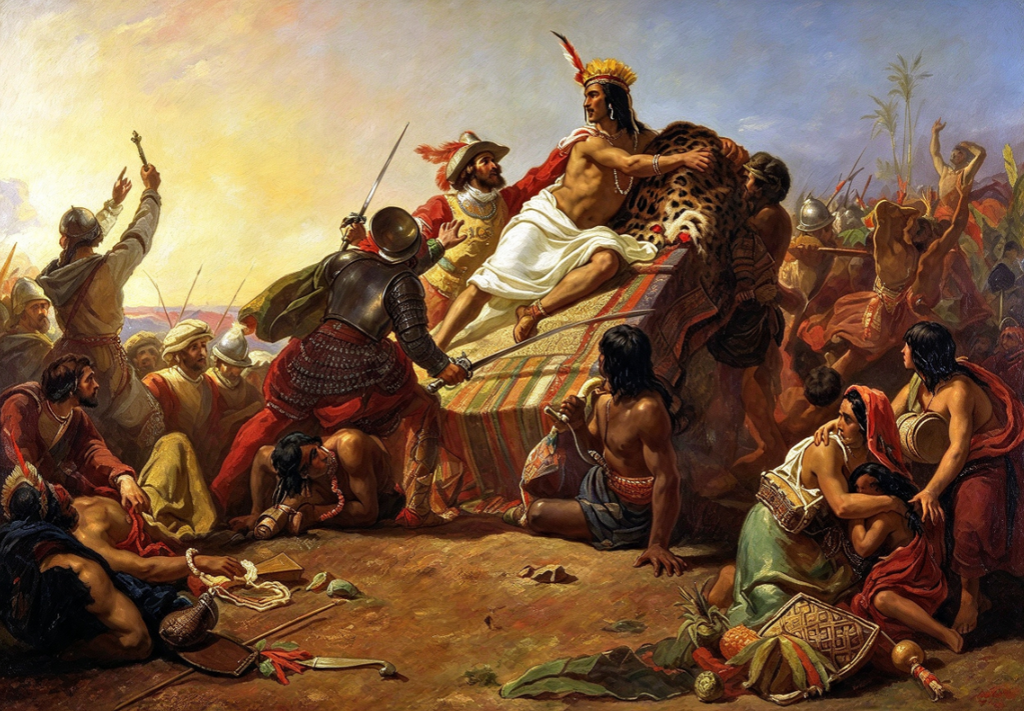
She thought of her son. She thought of the disk of gold in the cedar box in her house in Cusco, which she had inherited from her father, who had it from Cristóbal, who had it from Sebastián, who had carried it out of Cusco in the year of the third viceroy. She thought of the letter in the cramped Basque hand that she had never shown to a priest or a magistrate, that had come down the same path, wrapped around the gold for a hundred years like a band of fire, and she thought of what it had cost the man who wrote it, and of the word that was in it, one word, underlined twice in the fading ink by a hand that had commanded the sea.
“Gabriel,” she said. “They will kill you slowly.”
“They will kill me slowly in any case,” he said. “It is only a question of the day, and of how many of my people see me die standing. Micaela has the lists. Sixty thousand, little cousin, if the towns answer, and they will answer. There are curacas in three provinces who remember the schools and the taxes and the famine years, and there are caciques in every valley, and there are even priests.” He took a breath. “I do not ask you to raise anything. I ask you to be what you are, in Cusco. The city of my fathers is going to fill with liars before Christmas. Be the one person in it that both sides can talk through.”
The plaza was graying with the dawn now. In the firelight, men were reading a broadsheet aloud, a young man’s voice, a proclamation, the death of the corregidor, the justice of the King, the rights of the Indian peoples, and Mariana heard, running under it all, a pulse like the sills of the mountain rivers in November, the sound of a thing coming down that nothing will stop, and she thought of the words in the old letter, that the one who held the sun should hold also the trust, and she swung down from her mule.
“I have a house in the street of the Marquesas,” she said. “Send me your Micaela when she comes to Cusco. Not your captains. Micaela.”
He kissed her on both cheeks, there in the rising light, the last Sapa Inca, in the first morning of the war, and the bells of Pampamarca rang out over the valley of Tinta, and the men with the slings in their ponchos began, in silence, to march.
VII. Cusco
She was six weeks in Cusco before the first report. The city lay in the bowl of its hills like the hearthstone of a vanished house, the stones of the Incas under the walls of the Spaniards, the convent of the Company of Jesus standing where the Sun’s own palace had stood, as though the Jesuits had looked at the finest foundation in the world two hundred years before and thought it a waste to leave it lying empty. Mariana had been born in Cusco and hated it with a perfect tenderness, the way one hates a parent.
The war came in the shape of rumors first, and refugees second, and then, in January of 1781, the sound of the church bells going wrong. Her cousin’s cousin, Diego Cristóbal, had the hills. The rebels were at the gates. The corregidor of Chinchero had been torn to pieces in his own patio. And in the great families of the Spanish city, in the houses of the Inca nobility too, in the drawing rooms where the grandsons of the canopy-bearers served the grandsons of the encomenderos (holders of royal grants of Indian tribute), everyone played the only game there was, which was to guess the winner early enough to be on the right wall when the shooting started.
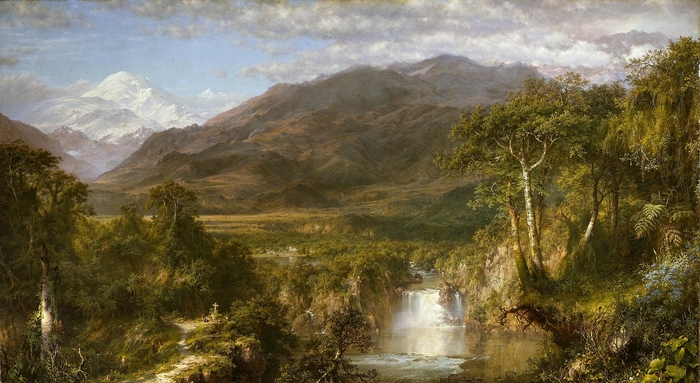
Her house filled. It filled the way the letter had told her, a hundred years before, that it should. Indians came who had information, and Spaniards came who had information, and the strange truth that made her useful to both was that she could not be accused by either side of being the other, because she was plainly, publicly, documentably both. The caciques of the valleys came to her court at the back of the house, and the oidores’s (judges’) wives came to her parlor at the front, and she poured for them all the same chocolate, from the same silver pot her ancestor had taken as a quarter-payment on a customs debt in 1656, and she wrote, in the fast Basque hand she had inherited along with the pot, the letters that went out to the camps in the hills.
Micaela Bastidas came to her once. Once was enough.
The rebel’s wife was small, and brown, and quiet, and had a manner of not blinking that was more frightening in that terrible winter than any Spaniard’s cannon. She came into the parlor with mud to her knees, sat, and refused the chocolate. Around her, unremarked, the house rearranged itself into a new configuration Mariana only understood after the woman had gone: routes, she had left routes in Mariana’s mind, ways through the hills and the parishes and the loyalties of the Indian drovers of the alturas, pressed into her like a watermark, without one word of it ever being said aloud between them.
“You are of the sun,” Micaela said, at the door, at the end. “I know the story. I know what you keep in the house of the Marquesas, and so does my husband, and so will the Inquisition when it is all over, whoever wins. And I will tell you why I have not told them.” She looked at Mariana and did not blink. “Because he is going to lose, and he knows it, and it does not matter.”
“Then why, señora?”
“Because a hundred years from now,” Mica said, “the name will do what the uprising cannot. That is what the gold is for. Do you understand your own inheritance, Mariana? You are not the keeper of a treasure. You are the keeper of a proof. That the kingdom was, and therefore that it can be.”
She went out into the winter of Cusco in the year 1781, into the mud and the bells, and Mariana stood in her doorway, holding a letter from the other side that she was meant to carry, and understood that she had just been entrusted with a purpose, and that both of them were going to be dead within the year.
VIII. The Eighteenth of May
They brought him through the streets of Cusco in the fourth month of that year, and the city that had made him a schoolboy at San Borja, a muleteer, a trader in mules and silver and memory, came out onto its walls to see. The bells were silent. The troops of the King of Spain held the plaza, an army of Indians of the lowlands and Spaniards and mestizos, because that was the shape the war had taken, in the end, an avalanche of the wretched of the mountains stopped by other Indians who had chosen the King’s certainty over their cousin’s justice, and no one in the plaza could look at that arrangement and feel clean.
Mariana stood where the letter had told her to stand, in the gallery of a friend’s house near the university, with the cedar box under her arm like a market basket, holding the hand of her son. The ten prisoners were brought out together. The friars went to each of them. There was an order to the killing that had been written down in advance by the visitor Areche and approved across an ocean, and the order was the sentence itself, the cruelty was the text, and it was read aloud.
She did not look away. She held her son’s hand, and she watched, because the letter had told her to watch, and its final page had been explicit about this, in the fast Basque hand, in the fading ink: that the day would come, that there would be a scaffold, that there would be a gold disk and a memory of two lineages, and that her descendants, whoever they were, would need to know that the account had been kept, that the witnesses had not flinched.
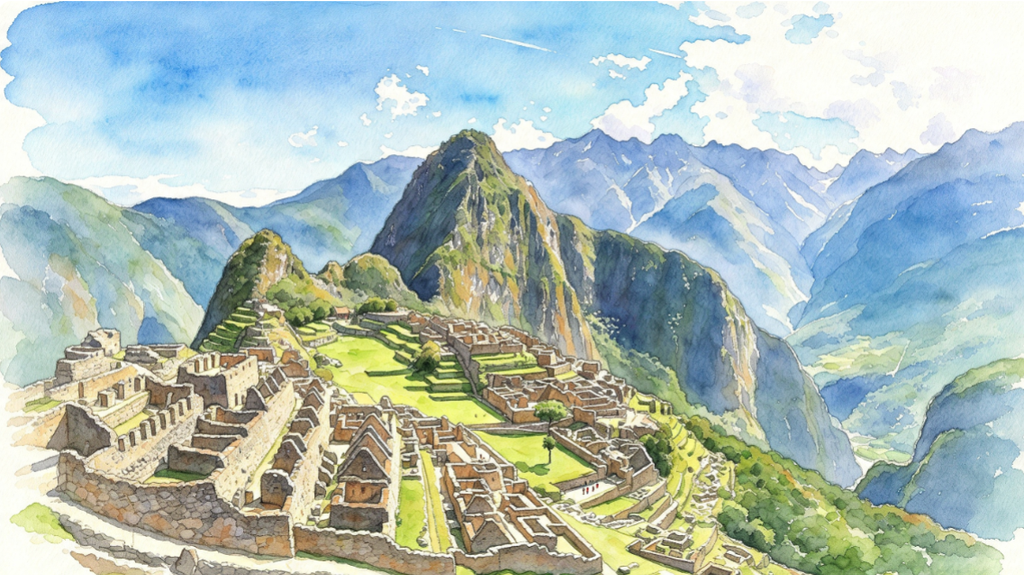
The tongue of Micaela Bastidas was torn from her before the garrote (execution by strangulation), because she had spoken too well. Her body, small, brown, unblinking, went to its death like a courtier. Then his son Hipólito. Then Túpac Amaru the second, descendant of the Inca, the last man to hold in his own body the two centuries of the colonial peace and the four hundred years of the Andean memory, who had been her cousin, and her host, and her faction, and her country’s one attempt, her son’s inheritance, and the horses came and were driven, and the cords, and the failure of the ancient blood on the ancient stone.
The crowd did not weep. That was the thing that was remembered afterward, in the mountains, in the century of silence that followed. The ten thousand Indians and Spaniards who filled the plaza of Cusco on the eighteenth of May of 1781 watched the death of the Inca in total silence, and the silence was the true end of the colonial peace, and every Spaniard in that plaza understood it, though not one of them said it aloud.
The wind came down from the Sacsayhuamán (the great Inca fortress above Cusco) and scattered the ashes, and Mariana Urdanegui y Topa went home through the emptying streets, carrying the cedar box, carrying the letter, carrying in her eleven-year-old son the whole of both bloodlines of this story, and she took the gold and the paper out before the fire of her house and she read the letter through once more, standing, the way its writer had written it, in a hurry, a man making one record before the light went.
Lima, 1821
In the plaza of Lima, on the twenty-eighth of July of 1821, in the presence of the liberating army and under a sky of the gray Lima winter that had been like a held breath for a decade, the act of the independence of Peru was read aloud, and then, one by one, the leading men of the city came forward to a table and signed their names to it.
Among them came a young creole aristocrat, a resident of Lima, aged forty-one, a man of the great houses of the viceroyalty’s last generation, whose grandmother’s grandmother had been a daughter of the house of the Marqueses de Villafuerte, of the Urdanegui, the Basque general of the South Sea, the Jesuit of Lima, the founder of Orduña. His name was Manuel de la Puente y Querejazu, and in the fullness of the republic he would be the sixth Marqués de Villafuerte, the title confirmed by the new Peru that his signature on that day helped to call into being.
He signed his name in a steady hand, before the crowd, in the winter light, and those standing near him heard him say, very quietly, in a tone that the twentieth century would dismiss as an old man’s piety, one syllable of a language no one in the plaza expected a Lima aristocrat to know.
He said it to the sky.
In the plaza of Lima, in the year of the independence of Peru, in the earshot of three witnesses, the descendant of Juan de Urdanegui greeted the sun in Quechua.
“Inti kachkan (the sun abides).”
Author’s note re: Fact and Fiction
This story is anchored throughout to the documented life of Juan de Urdanegui y López de Inoso (Orduña, Vizcaya, baptized 25 January 1619; died Lima, 16 November 1682), first Marqués de Villafuerte. Whilst the majority of the element are historical, to fill and complete the story, some elements were created, thus this is a historical fiction.
Documented: His emigration to Peru in 1638 and his military rise to General of the Armada del Mar del Sur and Governor of the Callao presidio. His knighthood of the Order of Santiago (invested 18 August 1667, Convento de San Agustín, Lima). His marriage in Lima on 5 November 1668 to Constanza de Oviedo Luján y Recalde, daughter of the general and colonial official Francisco Sigoney y Luján. His office as Alguacil Mayor of the Lima Inquisition and his year as Alcalde Ordinario de Lima (second vote) in 1679, including a real 1679 court case before him involving Julián, an enslaved man of the Jesuit hacienda La Calera. His role as a merchant ship-owner (the Nuestra Señora de la Encarnación on the Portobelo-Callao run, at times in the slave trade) and administrator of the Callao customs. His donations of over 110,000 pesos to the Society of Jesus, including the 40,000 pesos endowed by deed of 12 March 1672 before notary Pedro Arias to found the Jesuit college and church of his native Orduña. His entry into the Society as a lay coadjutor brother with his wife’s authorization, his death on 16 November 1682, and the posthumous grant of the Villafuerte marquisate by Carlos II. His five documented children and their marriages into the Peruvian and Spanish nobility, and the later descent of the title to Manuel de la Puente y Querejazu, sixth Marqués de Villafuerte, a signatory of Peru’s Declaration of Independence in 1821.
Historical context: The colonial Inca nobility of Cusco (the noble families of the Indian cabildo, the canopy-bearers of Corpus Christi, the curacas and descendants of Vilcabamba), the Real Colegio de San Francisco de Borja in Cusco for the sons of caciques, the 1780 to 1783 rebellion of Túpac Amaru II (José Gabriel Condorcanqui Noguera), the execution of the corregidor Antonio de Arriaga on 4 November 1780, the siege of Cusco, the role of Micaela Bastidas, the rebel leadership of Diego Cristóbal Túpac Amaru, the visitor José Antonio de Areche, and the executions in the plaza of Cusco on 18 May 1781.